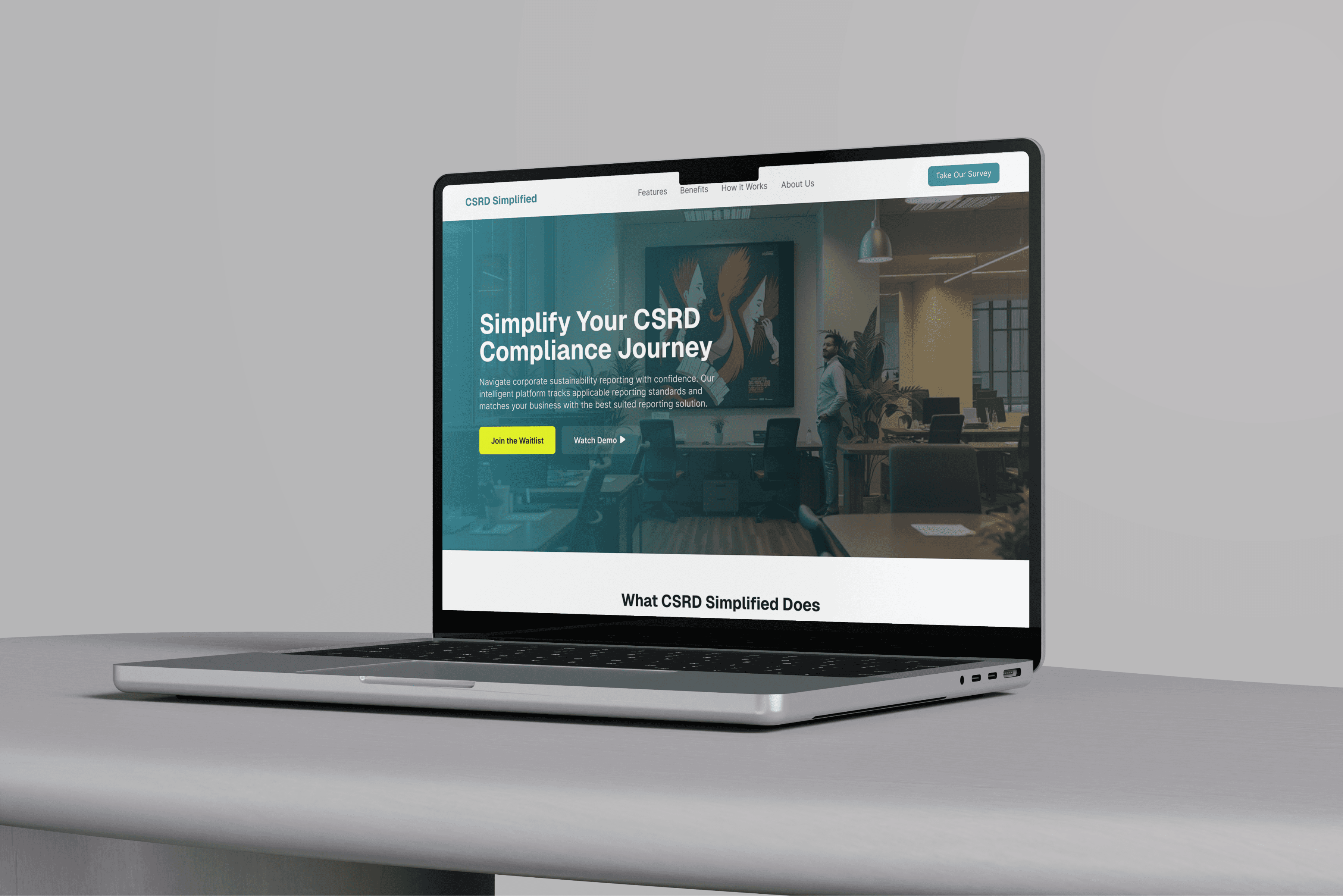
An AI-driven self-service tool for 33M EU companies

An AI-powered product that turns complex CSRD/ESRS legislation into a clear, actionable roadmap tailored to each company’s operations.

My role:

My role:

Creator | Concept Developer | Solution Architect | Product Designer

Creator | Concept Developer | Solution Architect | Product Designer

Project

Background

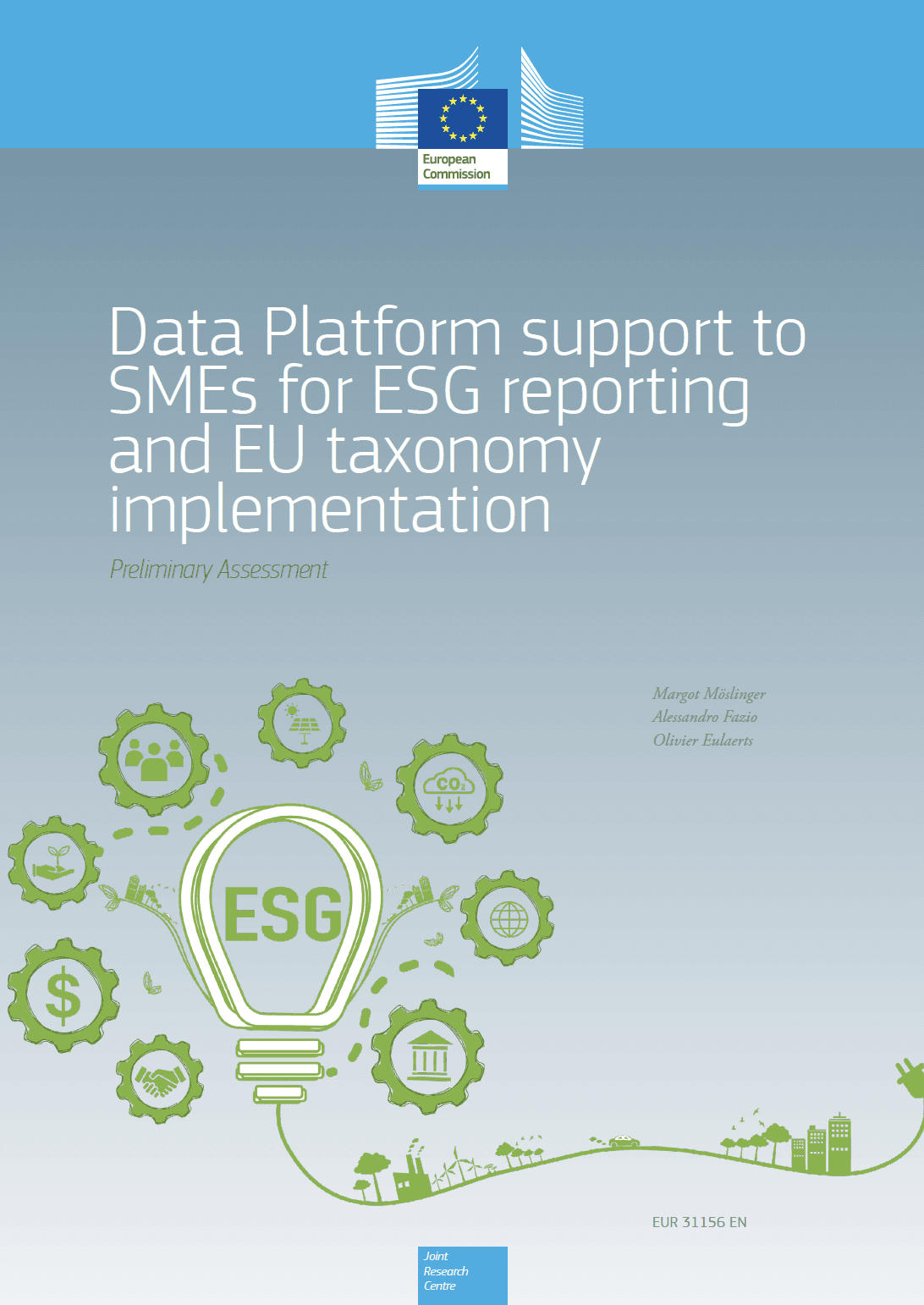
Companies across the EU are legally required to comply with the CSRD to report environmental and social impact, governance and how it's integrated in their business strategy. Yet, most SMEs lack the expertise, time and internal resources to interpret the ESRS requirements (sustainability standards) and turn them into actionable work.


The 2025 Omnibus update adjusts thresholds and timelines for some companies, but expectations from investors, customers and regulators remain.

CSRD Simplified

Details

CSRD Simplified is designed as a self-service product that translates regulatory complexity into a prioritised, company-specific roadmap - without requiring legal or sustainability expertise.


It's an AI-powered B2B tool helping Sustainability and Compliance Managers understand what to report and how to take action to improve impact.

Solution

Impact

With CSRD Simplified, organisations move from guessing to knowing.

Clarification of applicable reporting standards

Clarification of current impact and level of compliance

Reduces stress and confusion.

Actionable roadmap with real-time updates when CSRD changes.

Strengthens trust with investors, customers and partners.

CSRD Reporting Procrastination

CSRD Reporting Procrastination

While first learning about the CSRD framework (Corporate Sustainability Reporting Directive) in early 2024, I was astonished how underrepresented the topic was considering its massive implications for EU businesses. There seemed to be a lack of awareness of the timeline to compliance or paralysis by complex requirements. I just couldn't drop the "why?"


Through interviews, documents, webinars and online research, I identified a pattern:
Companies weren't ignorant, instead they weren't acting due to uncertainty, resource constraints and capacity overload.


In my head, I started calling this “CSRD Reporting Procrastination.”

While first learning about the CSRD framework (Corporate Sustainability Reporting Directive) in early 2024, I was astonished how underrepresented the topic was considering its massive implications for EU businesses. There seemed to be a lack of awareness of the timeline to compliance or paralysis by complex requirements. I just couldn't drop the "why?"


Through interviews, documents, webinars and online research, I identified a pattern:
Companies weren't ignorant, instead they weren't acting due to uncertainty, resource constraints and capacity overload.


In my head, I started calling this “CSRD Reporting Procrastination.”

While first learning about the CSRD framework (Corporate Sustainability Reporting Directive) in early 2024, I was astonished how underrepresented the topic was considering its massive implications for EU businesses. There seemed to be a lack of awareness of the timeline to compliance or paralysis by complex requirements. I just couldn't drop the "why?"


Through interviews, documents, webinars and online research, I identified a pattern:
Companies weren't ignorant, instead they weren't acting due to uncertainty, resource constraints and capacity overload.


In my head, I started calling this “CSRD Reporting Procrastination.”

Target group validation

Finding datasets with interviews about pain points and challenges with CSRD reporting, showed to be troublesome.


An "internet scrape" led me to find trustworthy sources with embedded data from the target group. The exact proof I needed!


With trusted resources and actual feedback from the target group, I could validate my hypotheses and dive into solving the problem.

Finding datasets of interviews with SME sustainability managers or the like - on pain points and challenges in CSRD reporting - showed to be troublesome.


An internet scrape, iterating on the prompt a few times, led me to find trustworthy reports and articles with embedded interviews and quotes from SME representatives. The exact proof I needed!


With trusted resources and actual feedback from the target group, I could validate my hypotheses and dive into solving their problems.

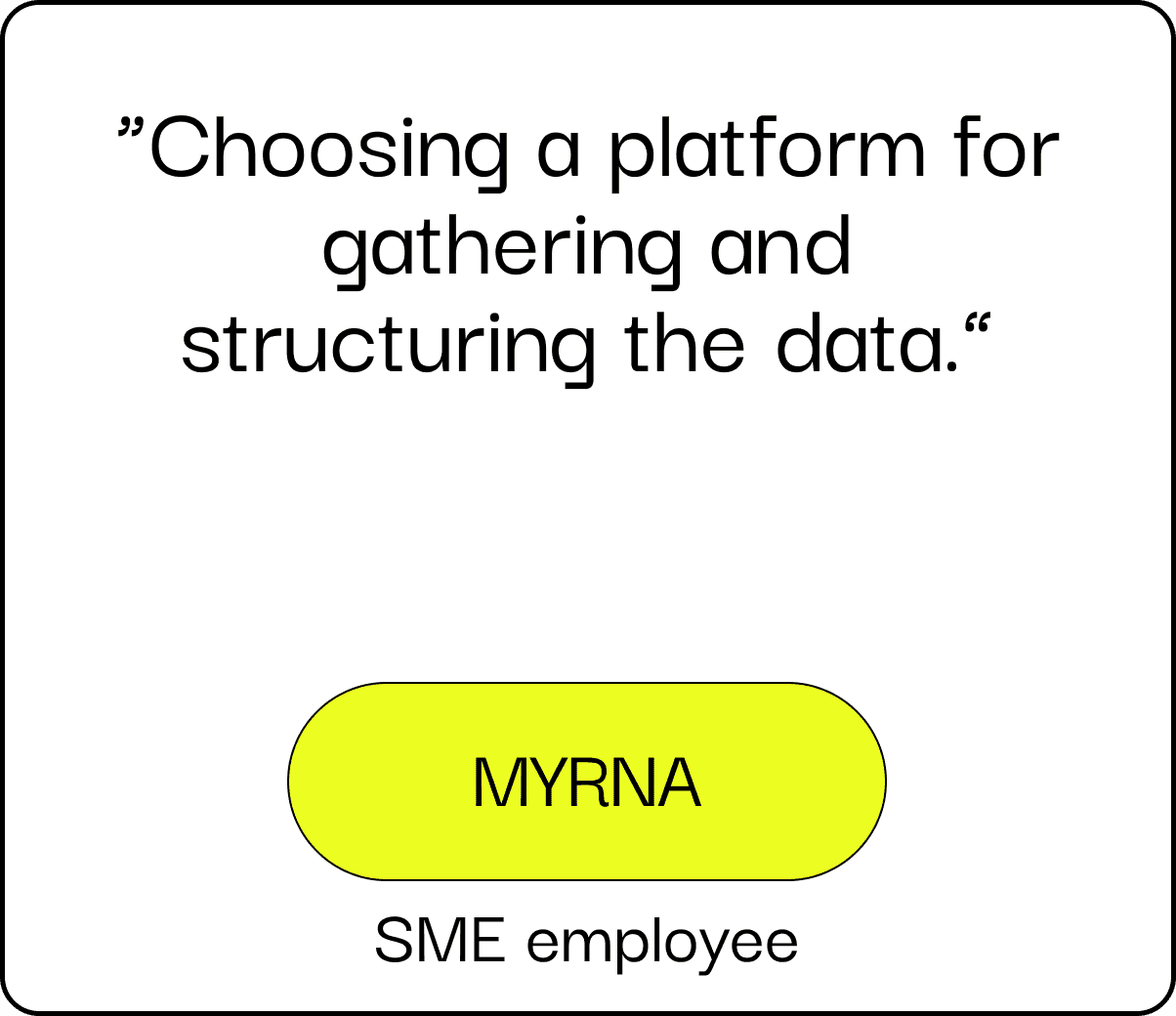
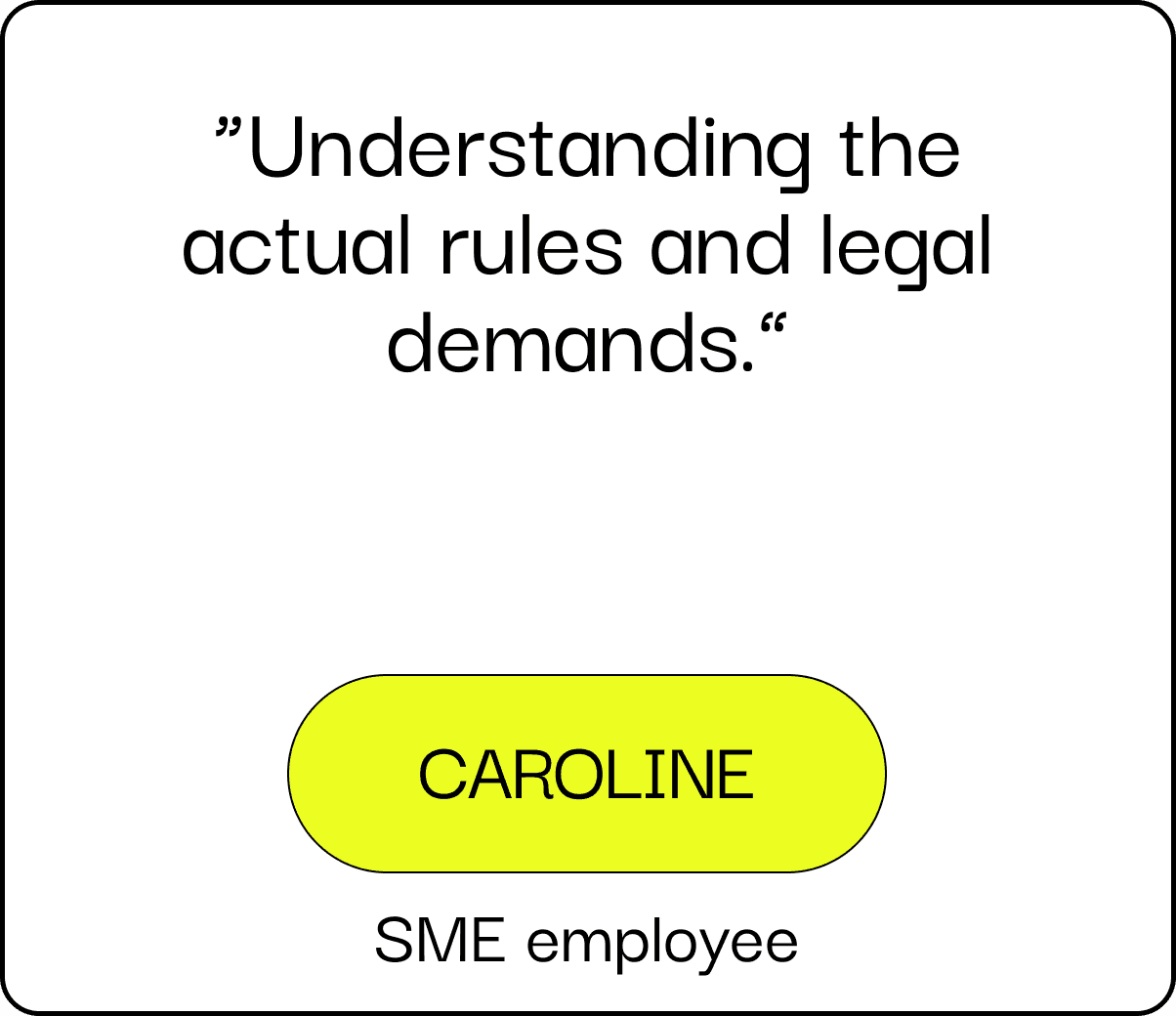
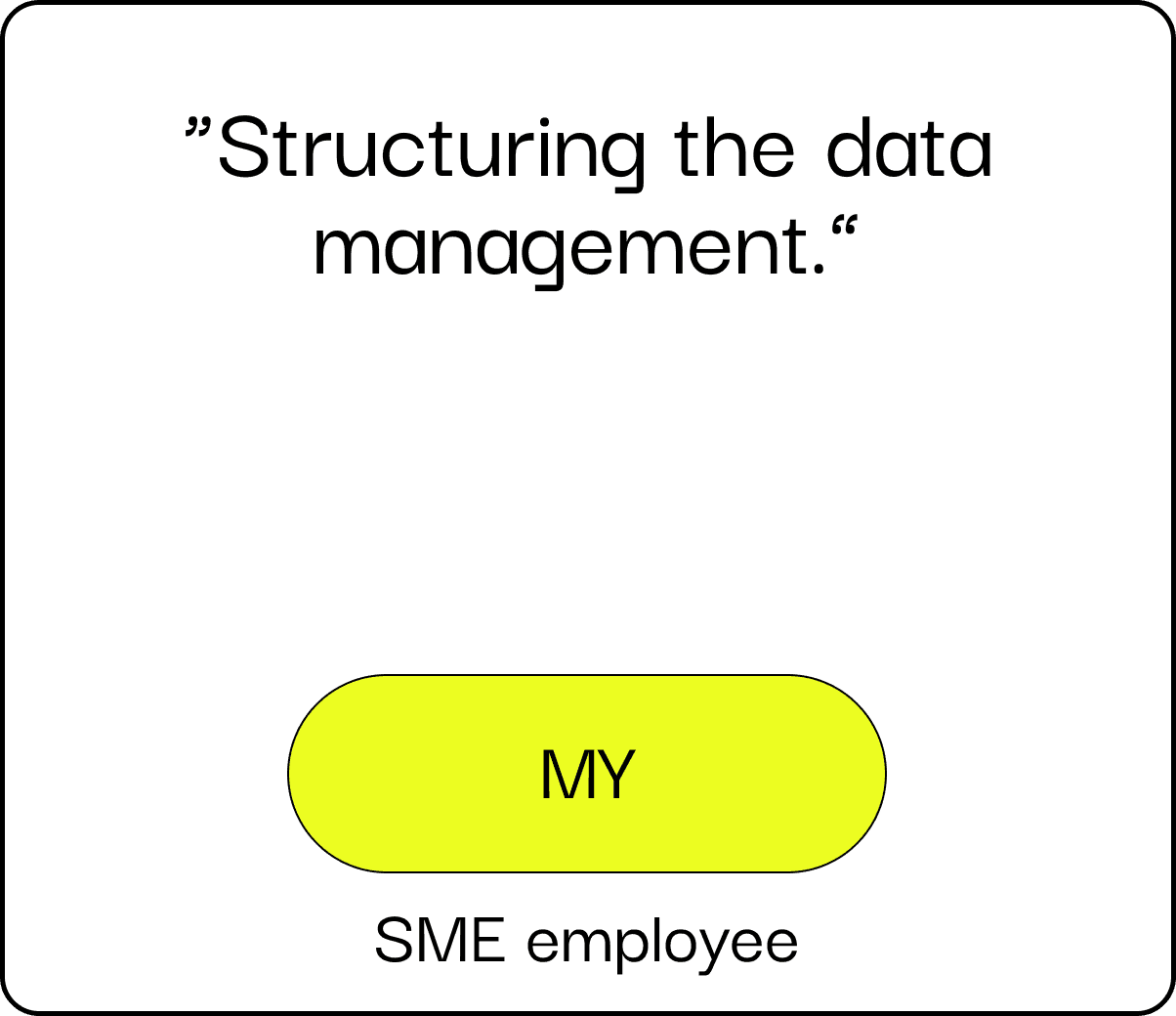
Voices from Sustainability Managers:
What‘s your biggest challenge with CSRD right now?

Voices from Sustainability Mgrs on the question ‘What‘s your biggest challenge with CSRD right now?‘

Reporting standards of 1,200 data points

The CSRD reporting requirements, ESRS, entail a comprehensive 1,200 granular reporting disclosures. Most companies need "only" report on up to 600 of them, SMEs even fewer.
• Which ones are applicable to a company's specific industry and operations?
• Where are the advanced filtering options?
• Where are the smart tools for resource-constrained companies?
A complex and time-consuming task for an overloaded sustainability/compliance manager.

The CSRD reporting requirements, ESRS, entail a comprehensive 1,200 granular reporting disclosures. Most companies need "only" report on up to 600 of them, SMEs even fewer.
• Which ones are applicable to a company's specific industry and operations?
• Where are the advanced filtering options?
• Where are the smart tools for resource-constrained companies?
A complex and time-consuming task for an overloaded sustainability/compliance manager.

An excellent

task for AI

An excellent

task for AI

An excellent

task for AI

Overarching problem: resource constraints

Overarching problem: resource constraints

Resource Constraints

Resource Constraints

Regulatory Complexity

Regulatory Complexity

Knowledge and Expertise Gap

Knowledge and Expertise Gap

Organisational Barriers

Organisational Barriers

Data Management Challenges

Data Management Challenges

External Pressure

External Pressure

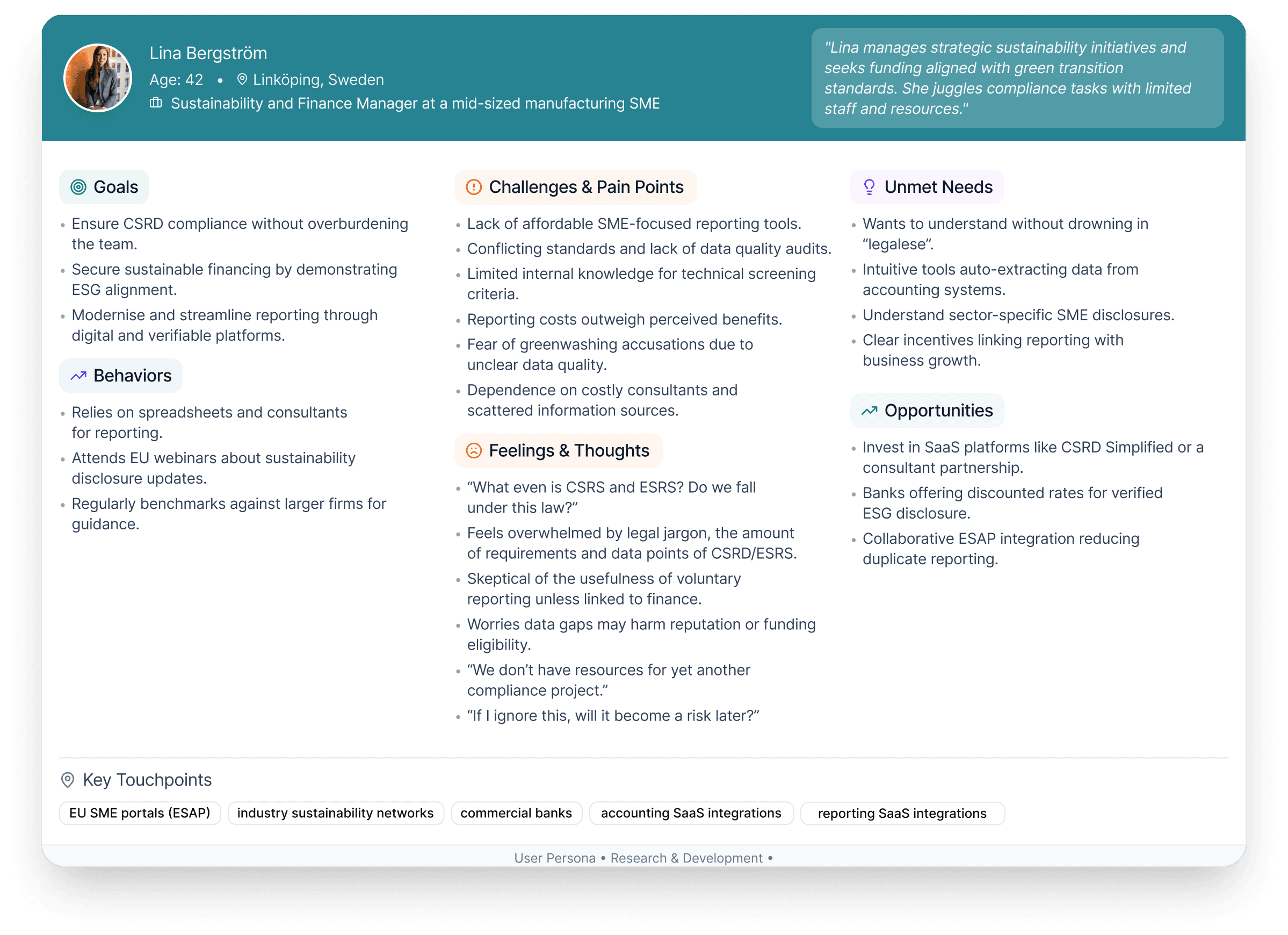
Overwhelmed Lina - a synthetic user

By clustering sources incorporating interviews, opinions and pain points I defined a synthetic persona with an LLM and Figma Make.
A tool eliminating user frustrations & pains

With AI as sidekick, I brainstormed ideas and developed the concept. Key insights:

  • Address the initial bottlenecks of clarifying requirements.

  • "CSRD, easy as 1-2-3": Enter company details, fill out a questionnaire, get your sustainability reporting standards and actions roadmap in just one click.

  • Provide value over time in line with expected updates in the legislation.

With AI as sidekick, I brainstormed ideas and developed the concept. Key insights:

  • Address the initial bottlenecks of clarifying requirements.

  • "CSRD, easy as 1-2-3": Enter company details, fill out a questionnaire, get your sustainability reporting standards and actions roadmap in just one click.

  • Provide value over time in line with expected updates in the legislation.

How Might We provide a solution with essential features for resource constrained companies in reporting impact?

A simple user-friendly AI-powered self-service SaaS tool started taking shape in my head. No legalese, jargon nor consultants.

A simple user-friendly AI-powered self-service SaaS tool started taking shape in my head. No legalese, jargon nor consultants.

Initial overwhelm.

The compliance crisis. Lina is faced with stacks of technical documents outlining CSRD rules. The sheer volume and ambiguity of the requirements makes her paralysed.

Evaluating options.

Lina tries to manually map existing data to requirements, leading her to the realisation of the immense time and cost involved and fear of misinterpretation.

Easy integration & quick win.

Lina finds that a CSRD Simplified subscription means a fast setup, easy onboarding and a reasonable price tag.

Self-service certainty.

The AI-agents resolve Lina's issues instantly in facing complex requirements and reporting standards.
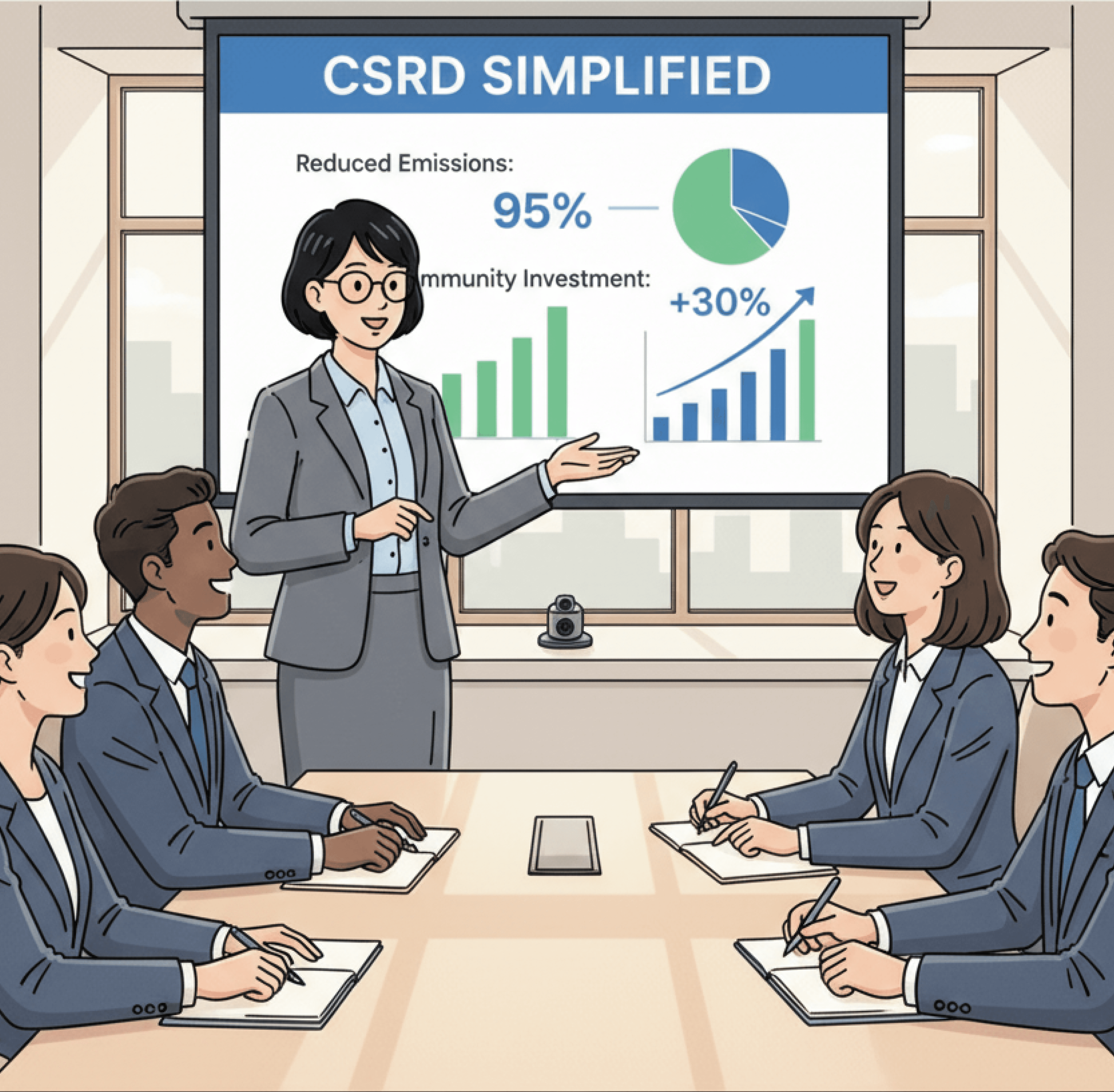
Efficiency & advocacy.

Proactive roadmap updates when CSRD changes, turns Lina into a confident manager with a future-proof plan.

From frustration to control - a storyboard by me and Gemini/Nano Banana

From frustration to control - a storyboard by me and Gemini/Nano Banana

From frustration to control - a storyboard by me and Gemini/Nano Banana

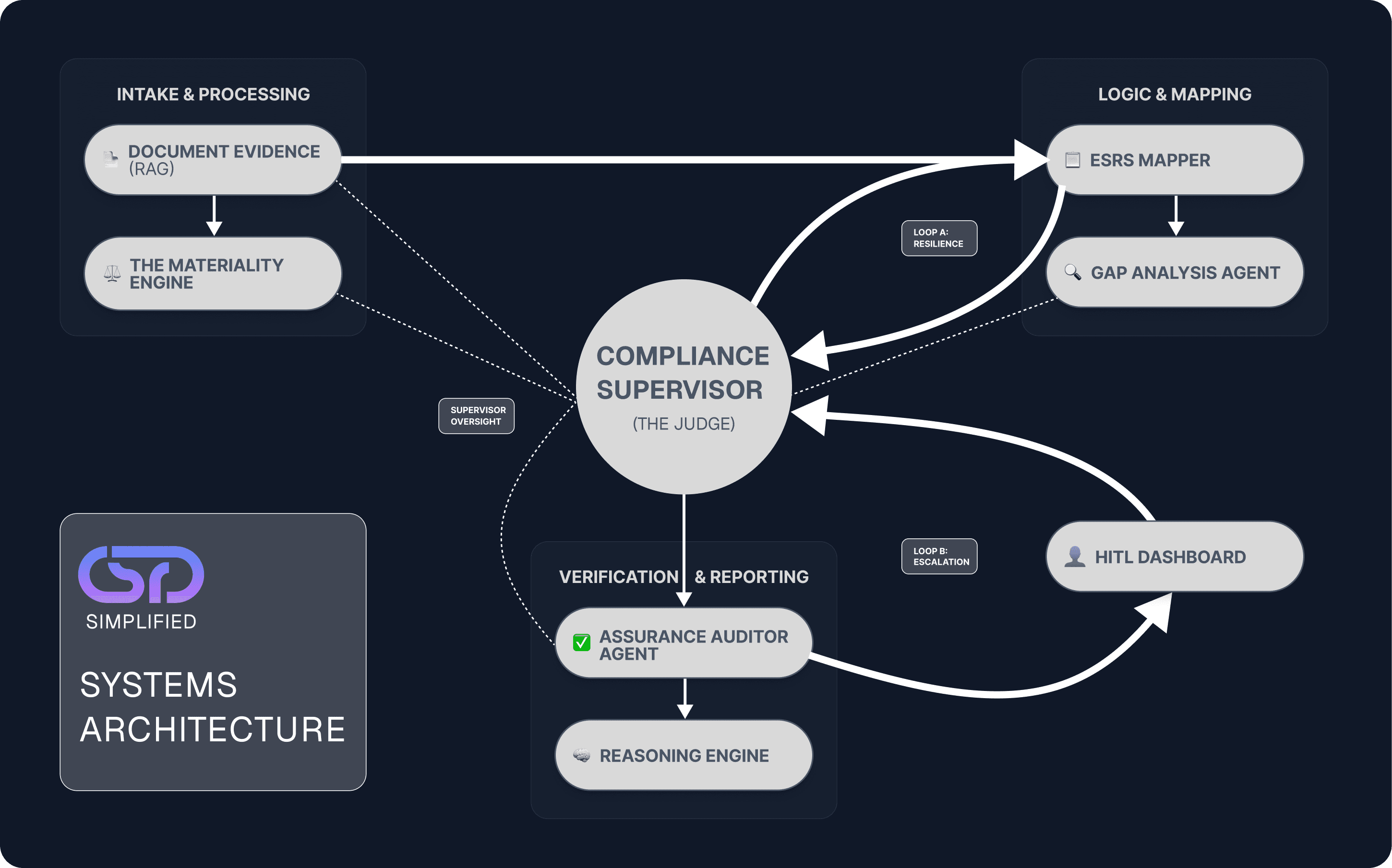
An agentic ecosystem evolves

Having built 47 wireframes of questions to map merely the basics of a double materiality and gap analysis, I realised this surely is a user abandonment situation. It will take too long to fill out the online form.

I came up with the idea of a dynamic, progressive questionnaire managed by an AI-agent asking only relevant and necessary questions based on company onboarding - a 15-20 minute commit.

From this revelation I developed the entire enterprise grade agentic ecosystem in Lovable.
Launching a waitlist website

The difficulty of landing interviews with very busy target managers, made me change strategy. I launched a waitlist site for my non-existing product and immersed myself in vibe-coding to build the beta.

Main objectives:

  • find targets to interview

  • get survey feedback

  • create some industry buzz

  • gain product traction

Check out the live waitlist site – vibe–coded by me in Lovable.

Check out the live waitlist site – vibe–coded by me in Lovable.

CSRD Simplified - beta

An AI-powered self-service SaaS-tool with features alleviating distress and pressure on Compliance and Sustainability Managers.

  • Tracks the ESRS requirements that apply for the company, based on industry, operations, type of impact and size.

  • Explains the requirement standards in plain, simple language.

  • Provides premium functions of insights and an actionable real-time updated roadmap when legislation changes - if a change applies to the company at all.

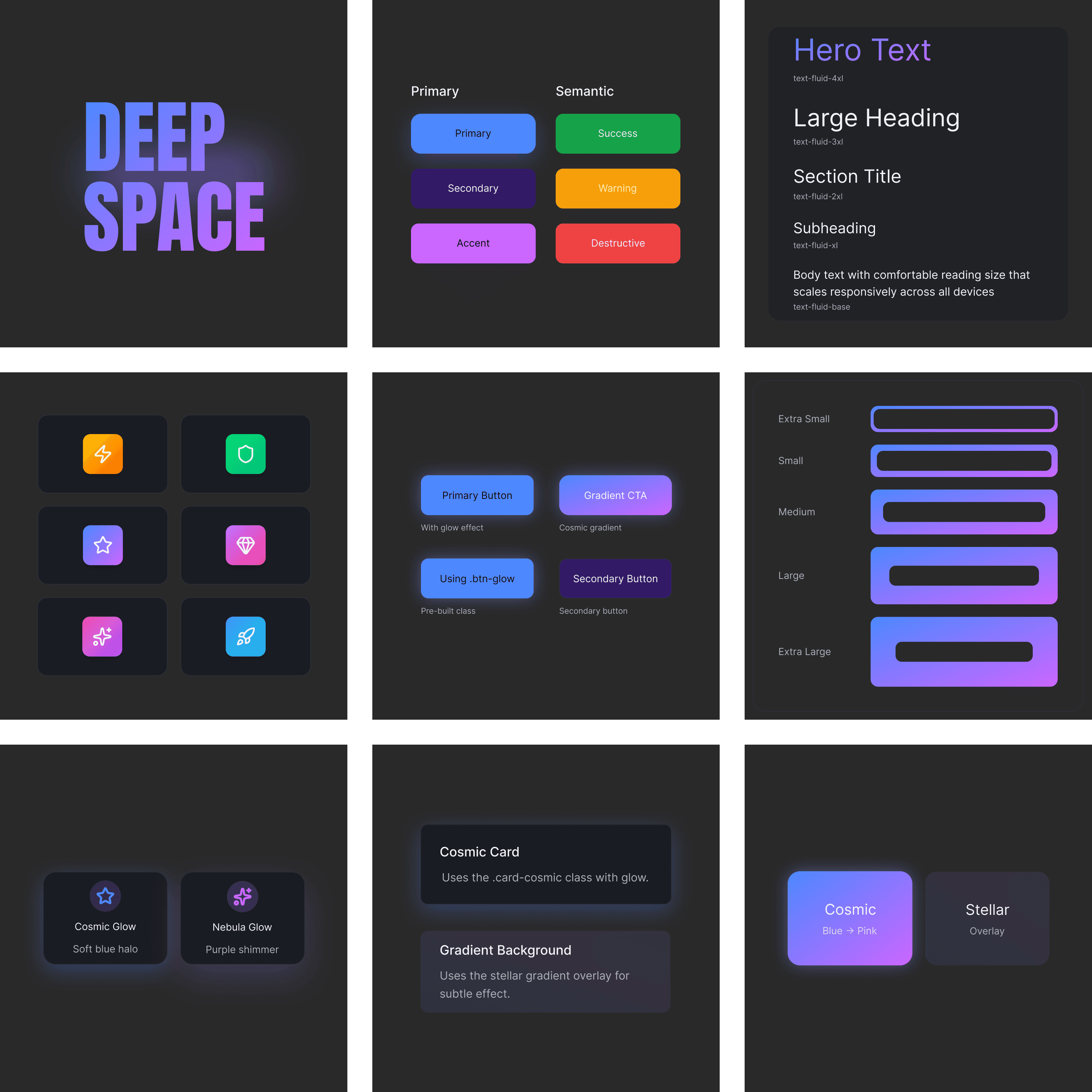
"Deep Space" Design System

Orchestrated, WCAG optimised and vibe-coded by me in Lovable.
Trade offs and product thinking

Rather than building a full scale data management service, I focused on removing the first barriers: not knowing what to report and how to fix impact with a lack of resources.


My initial idea was to implement an aggregator for the thousands of consultants and data management service platforms out there, with a top-3 recommendation matched with company specific operations and impact. But it didn't solve the initial problems of confusion, the lack of a clear future proof action plan nor allocating the finances for consultancy. The solution needed to be an alternative to costly services.

The Omnibus addition to the CSRD had me re-think strategy, target group for one. However, SMEs still benefit from reporting in line with the full ESRS scope to standout in the market and thereby disclose a higher level of transparency to attract investors and customers.

Future development could entail automated data collection from various departments of a company and training AI on other regulations and frameworks for scalability. But for now, my focus lies with the MVP.

Learnings

  • Purpose AI with what it does best - analyse massive amounts of data and complex text

  • Simplicity and clarity beats comprehensiveness in early-stage tools

  • It's never too late to pivot strategy.

  • Being a solo designer and developer, wearing all the hats, means fast paced exponential learning.

My Contribution

All of it. I'm a one woman band in this ongoing end-to-end project.

Create a free website with Framer, the website builder loved by startups, designers and agencies.