Making sustainable travelling fun and easy

Making sustainable travelling
fun and easy

Re-framing an info-dense SaaS web-app integration to a scalable app (B2B)
Nudging for smarter everyday travels.


  • Nudges addressing convenience, cost and health benefits

  • Personalised challenges

  • Feedback on progress/results

  • Opportunity to save/share favourite spots

  • Impact Tracker delivering motivational facts of behavioural change.

Nudging for smarter everyday travels.


  • Nudges addressing convenience, cost and health benefits

  • Personalised challenges

  • Feedback on progress/results

  • Opportunity to save/share favourite spots

  • Impact Tracker delivering motivational facts of behavioural change.

The problem

Research and testing of the current Smart Nudges Mobility solution highlighted areas for improvement, including information overload, a lack of intuitive functions and insufficient feedback on user actions. It also identified the need for more user control to personalise the experience and a clearer sense of purpose. Users were primarily motivated by factors like time, money, health and convenience rather than climate concerns. Additionally, they reacted positively to interactive elements and suggested adding more engaging and enjoyable features.

The desired outcome

  • Clarify the purpuse of Resvana and clear up the interface.

  • Increase the number of people who use Resvana.

  • Consider a recurring user and product scalability.

  • Make it fun and interesting.

The details

The problem

Research and testing of the current Smart Nudges Mobility solution highlighted areas for improvement, including information overload, a lack of intuitive functions and insufficient feedback on user actions. It also identified the need for more user control to personalise the experience and a clearer sense of purpose. Users were primarily motivated by factors like time, money, health and convenience rather than climate concerns. Additionally, they reacted positively to interactive elements and suggested adding more engaging and enjoyable features.

The desired outcome

  • Clarify the purpuse of Resvana and clear up the interface.

  • Increase the number of people who use Resvana.

  • Consider a recurring user and product scalability.

  • Make it fun and interesting.

The details

The problem

Research and testing of the current Smart Nudges Mobility solution highlighted areas for improvement, including information overload, a lack of intuitive functions and insufficient feedback on user actions. It also identified the need for more user control to personalise the experience and a clearer sense of purpose. Users were primarily motivated by factors like time, money, health and convenience rather than climate concerns. Additionally, they reacted positively to interactive elements and suggested adding more engaging and enjoyable features.

The desired outcome

  • Clarify the purpuse of Resvana and clear up the interface.

  • Increase the number of people who use Resvana.

  • Consider a recurring user and product scalability.

  • Make it fun and interesting.

The details

Before

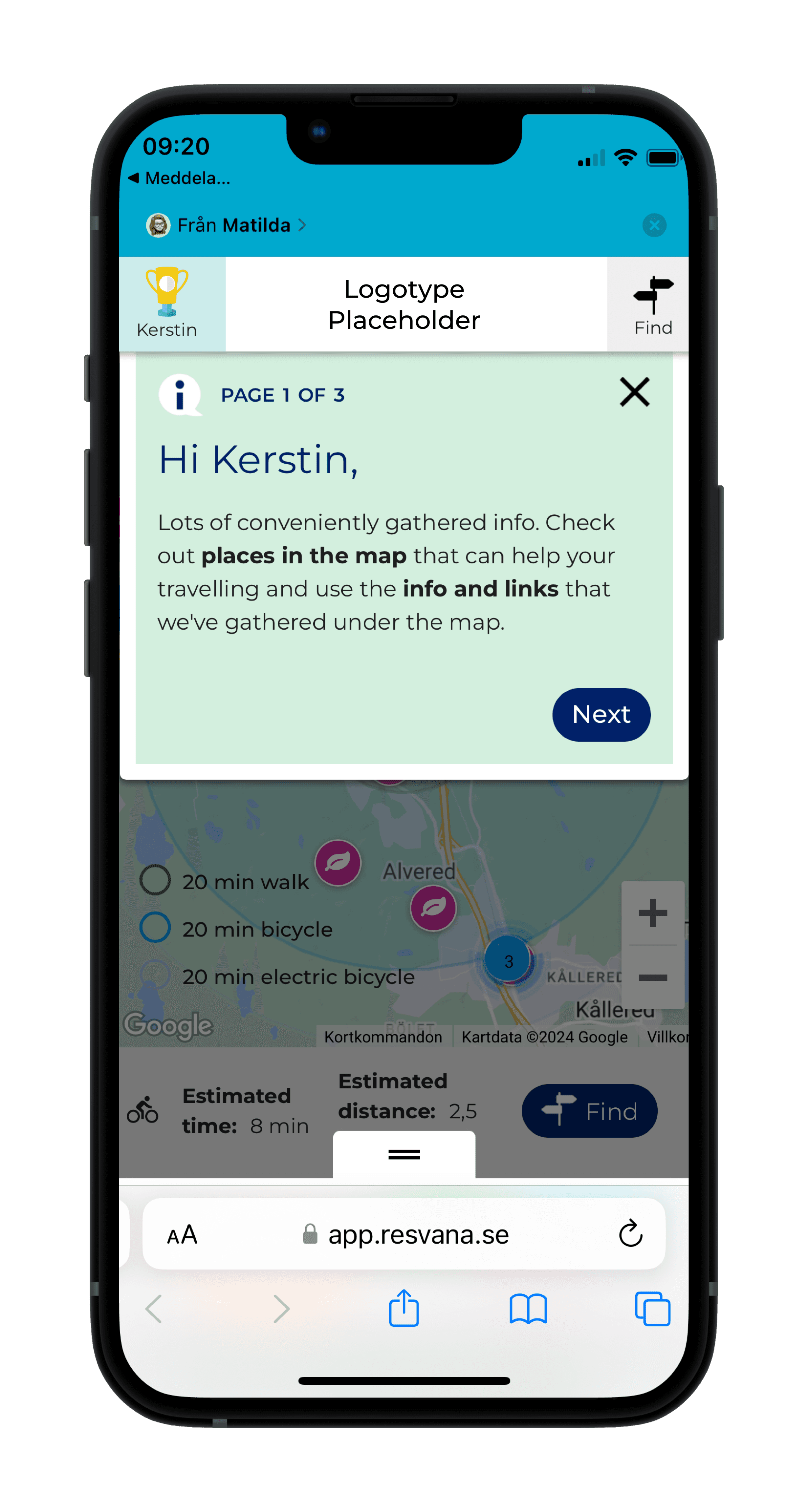
Unclear purpose and no tailoring of content.
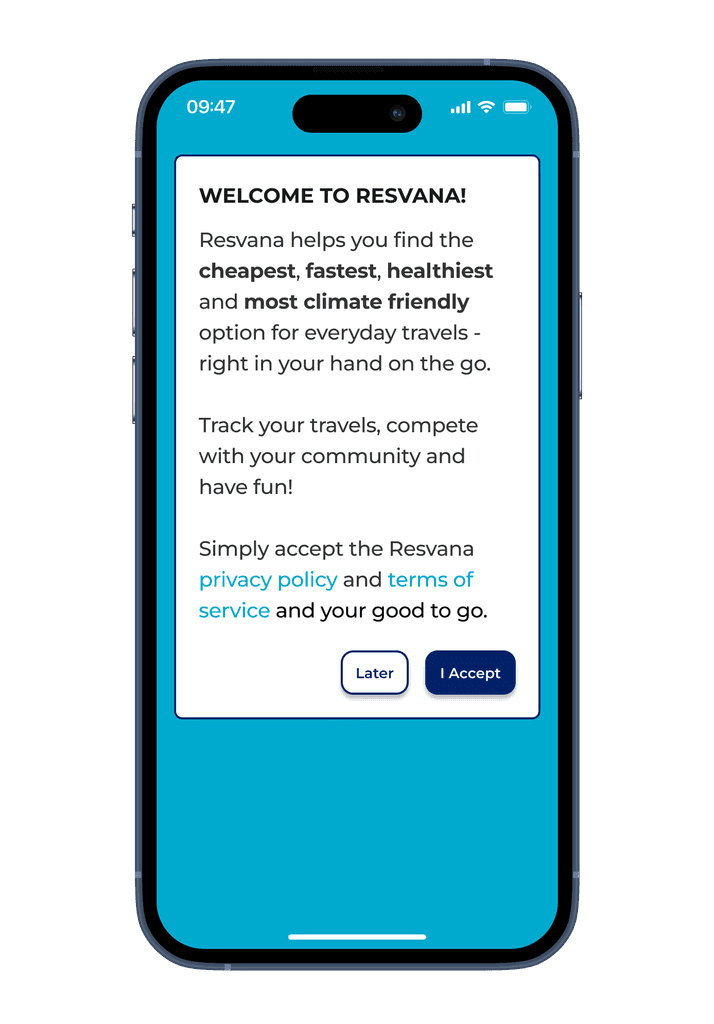
After

Purpose clarified and aligned with user wants and needs.
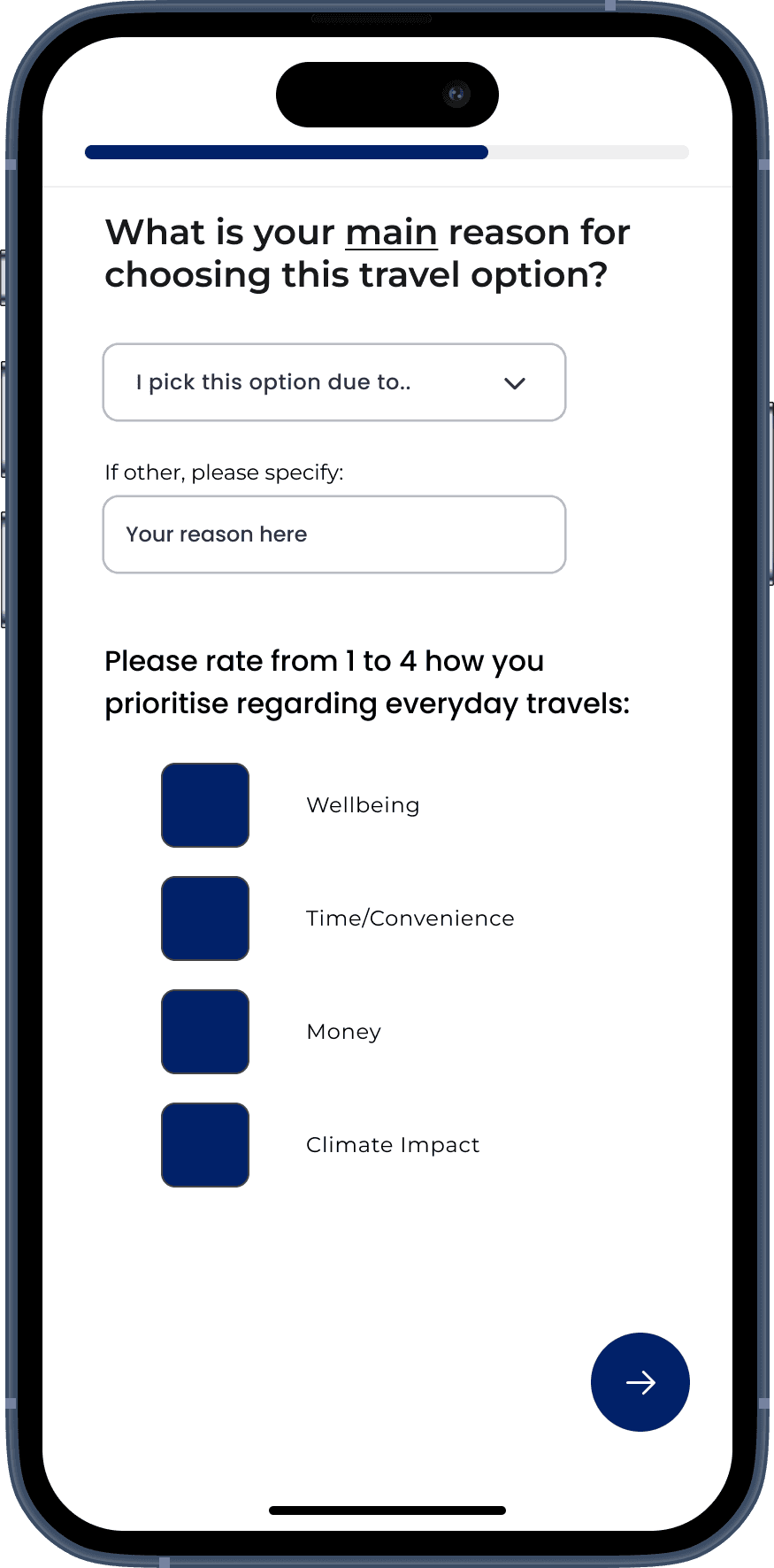
After

Opportunity to set individual habits for tailored app content.
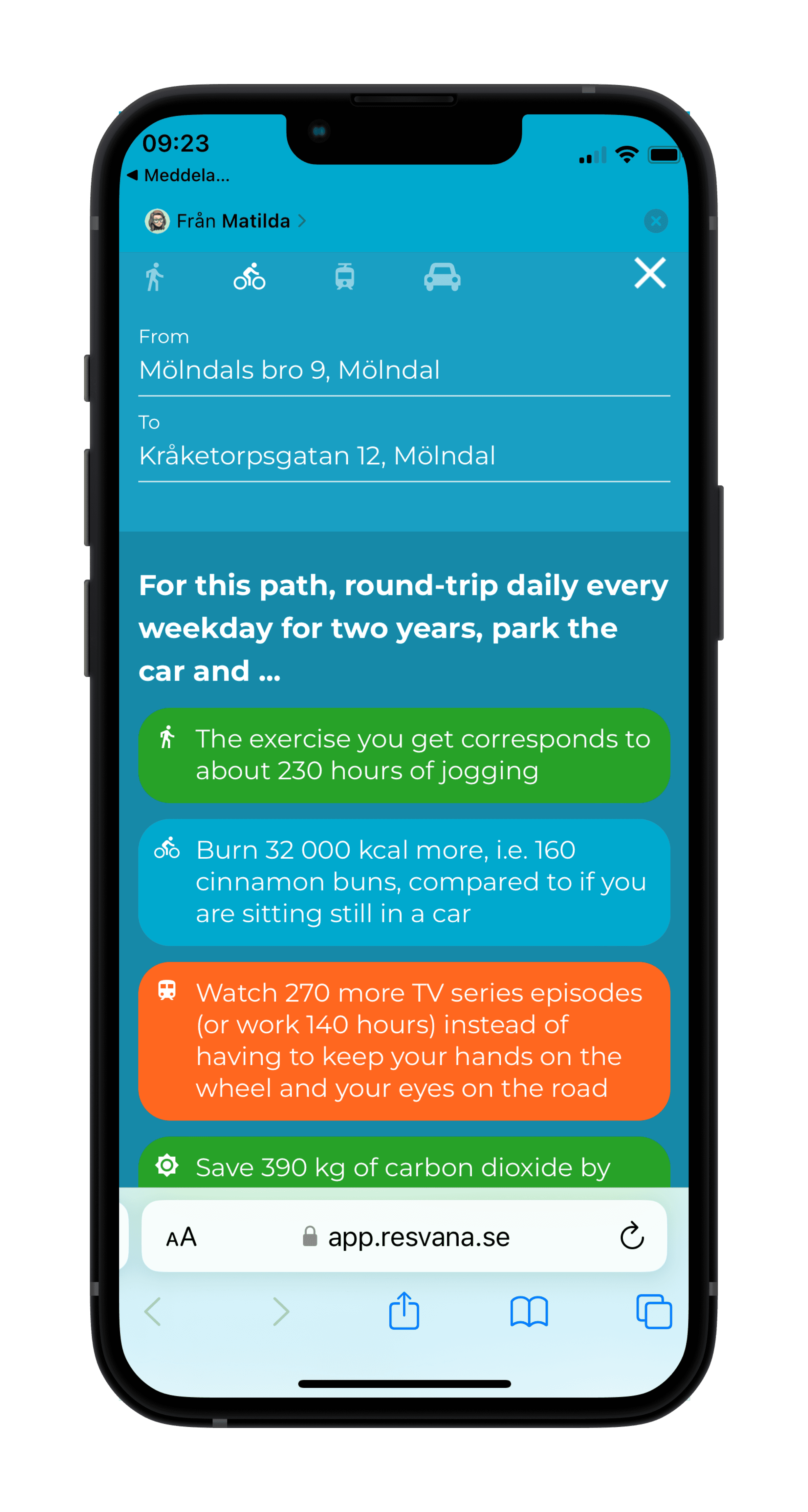
Before

Colour scheme not compliant with WCAG guidelines and too much text facts in general.
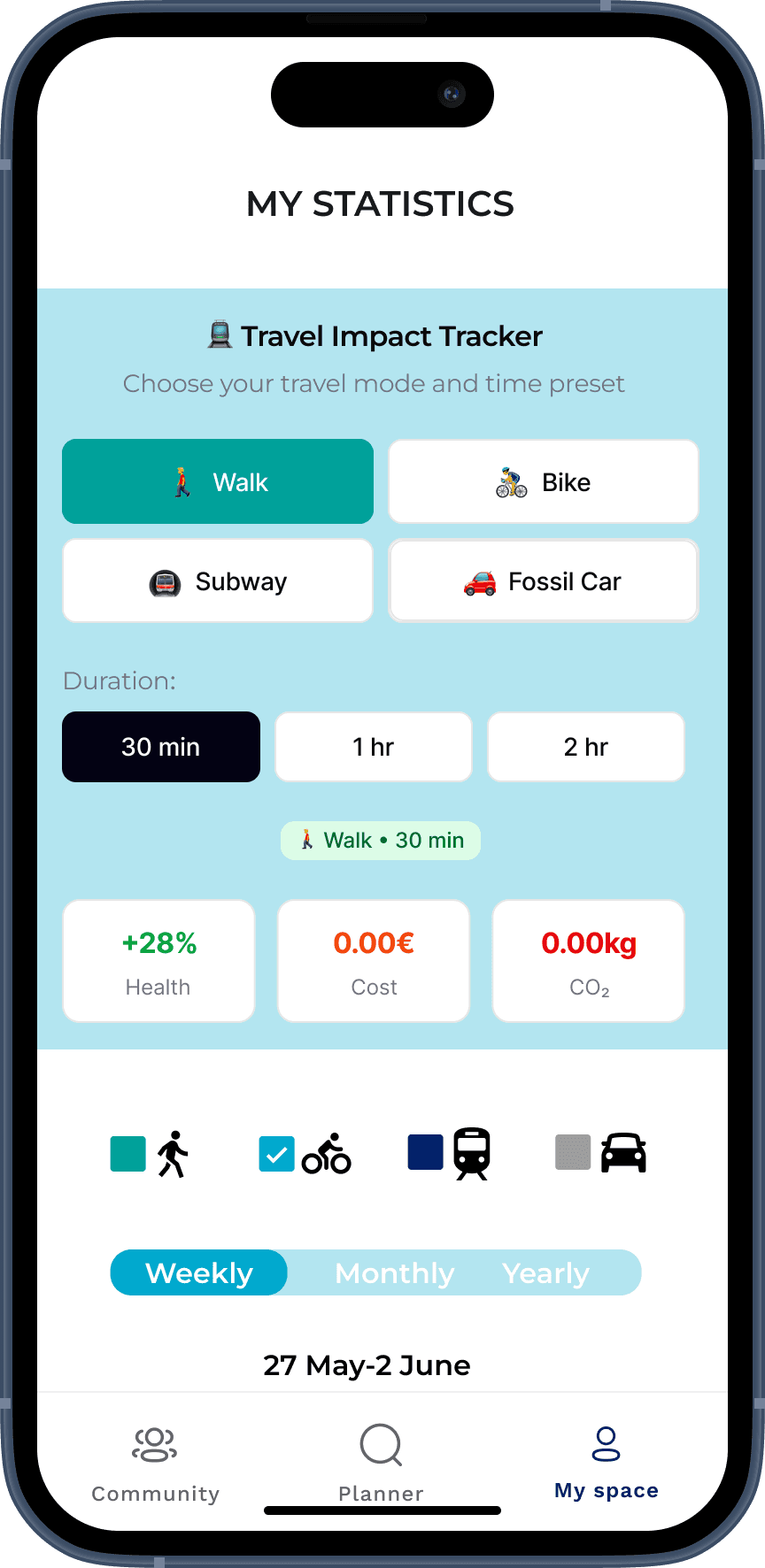
Travel Impact Tracker

After

Opportunity to calculate a change in behaviour, measuring health, climate and cost benefits.
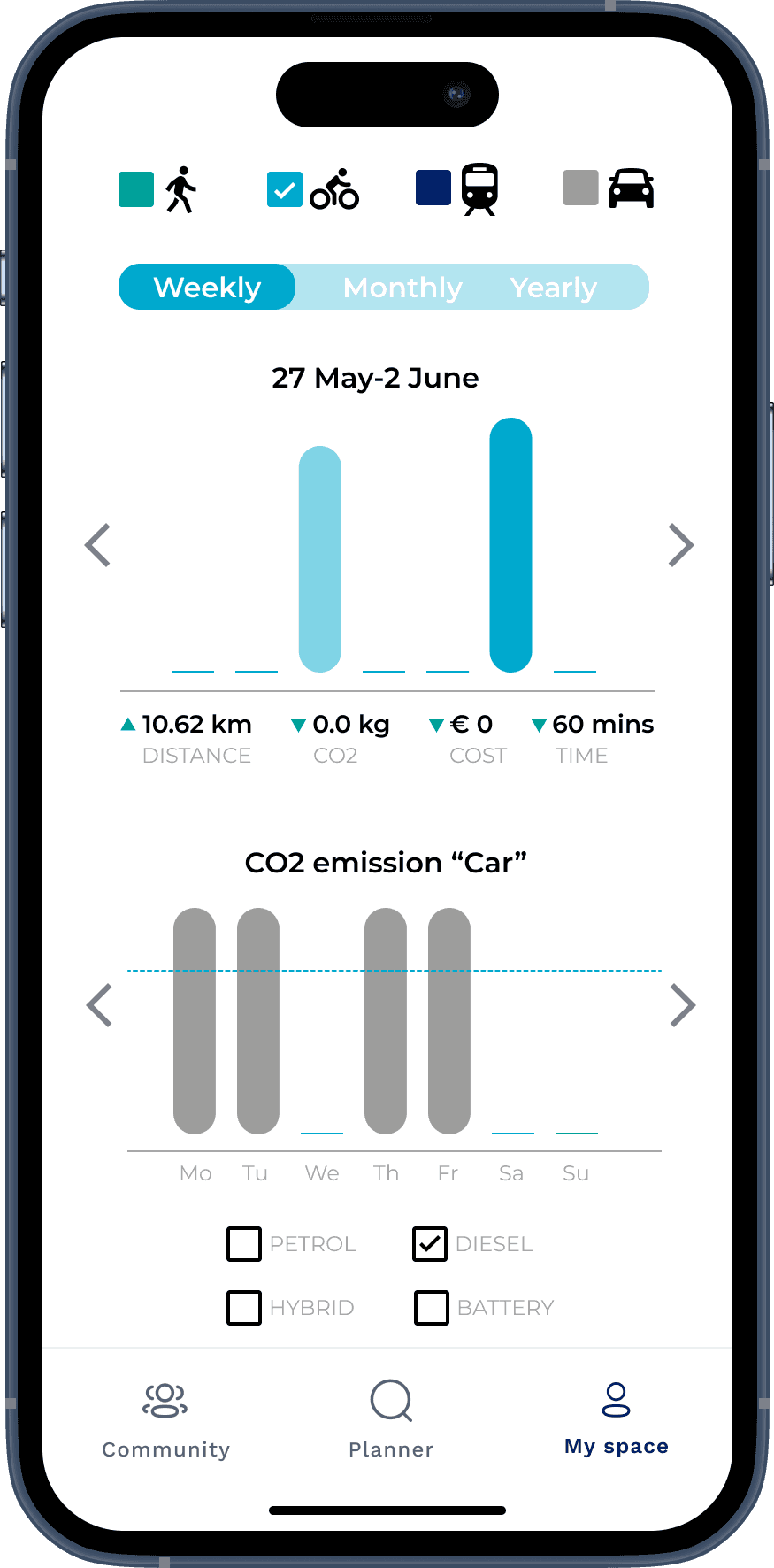
Weekly/Monthly/Yearly CO2-emissions

After

Educational statistics enabling to toggle various travel modes and follow outcome over time.
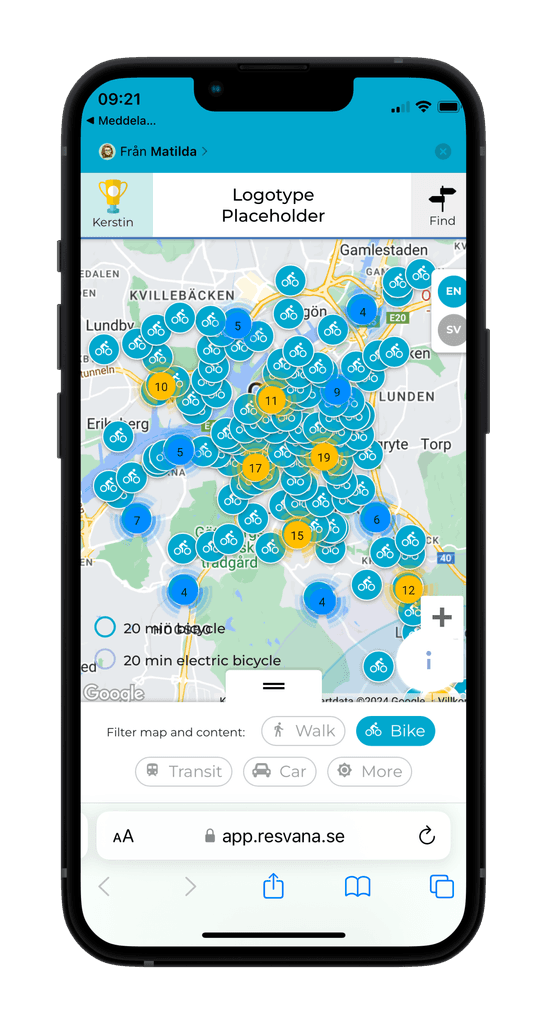
Before

Map points toggled from start view. Unclear to user that buttons govern map points and not route.
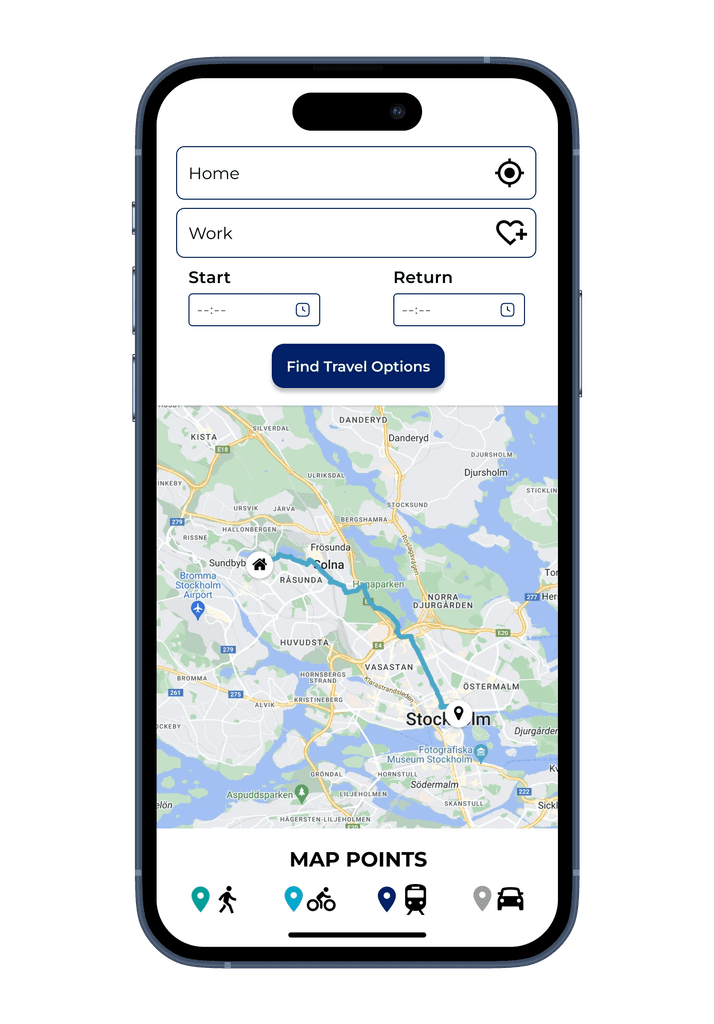
After

Uncluttered UI with optional map points. Find-button central and opportunity to save destination.
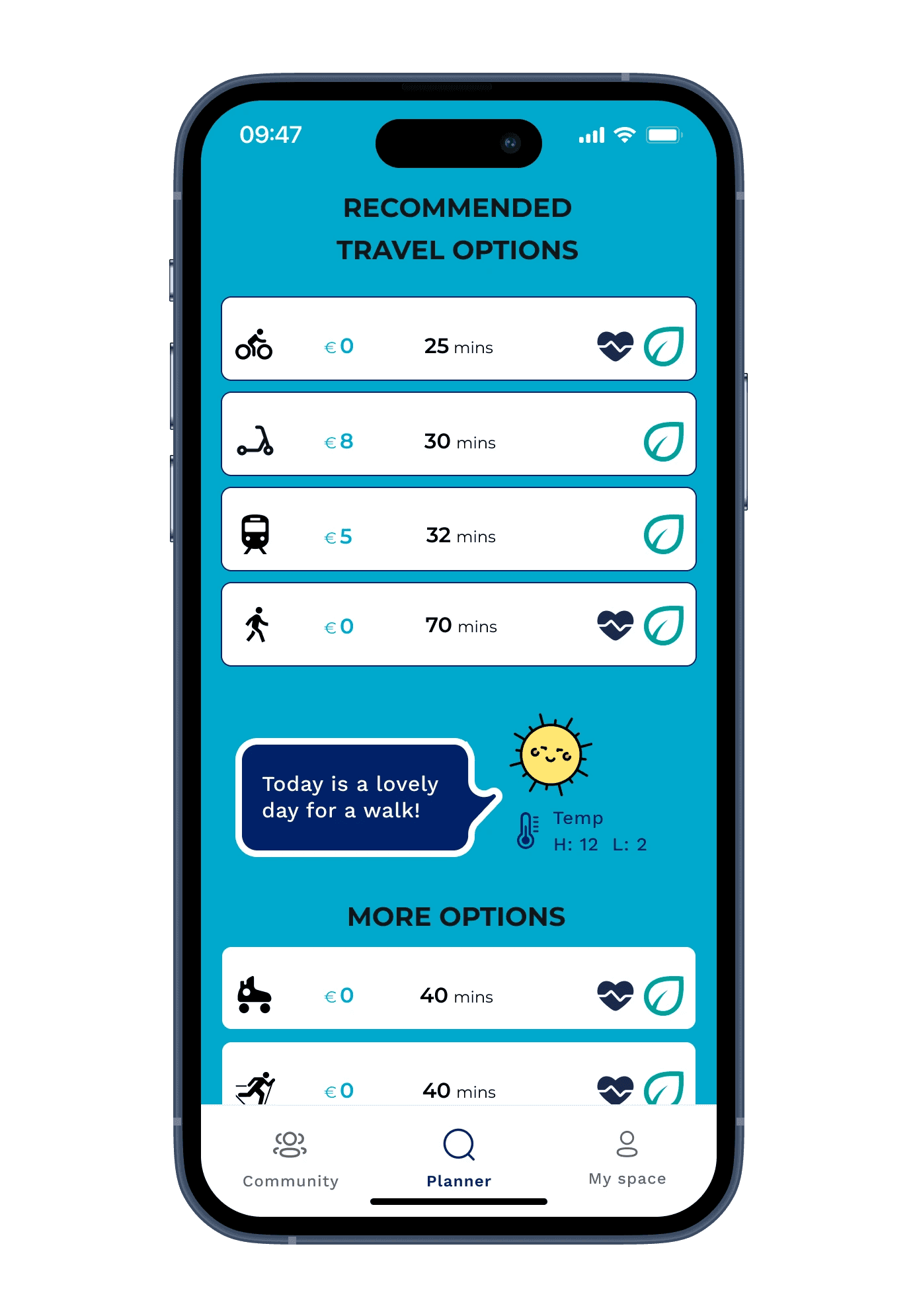
After

Suggested travel options showing time and cost. Added icons for healthy or CO2-friendly nudges.
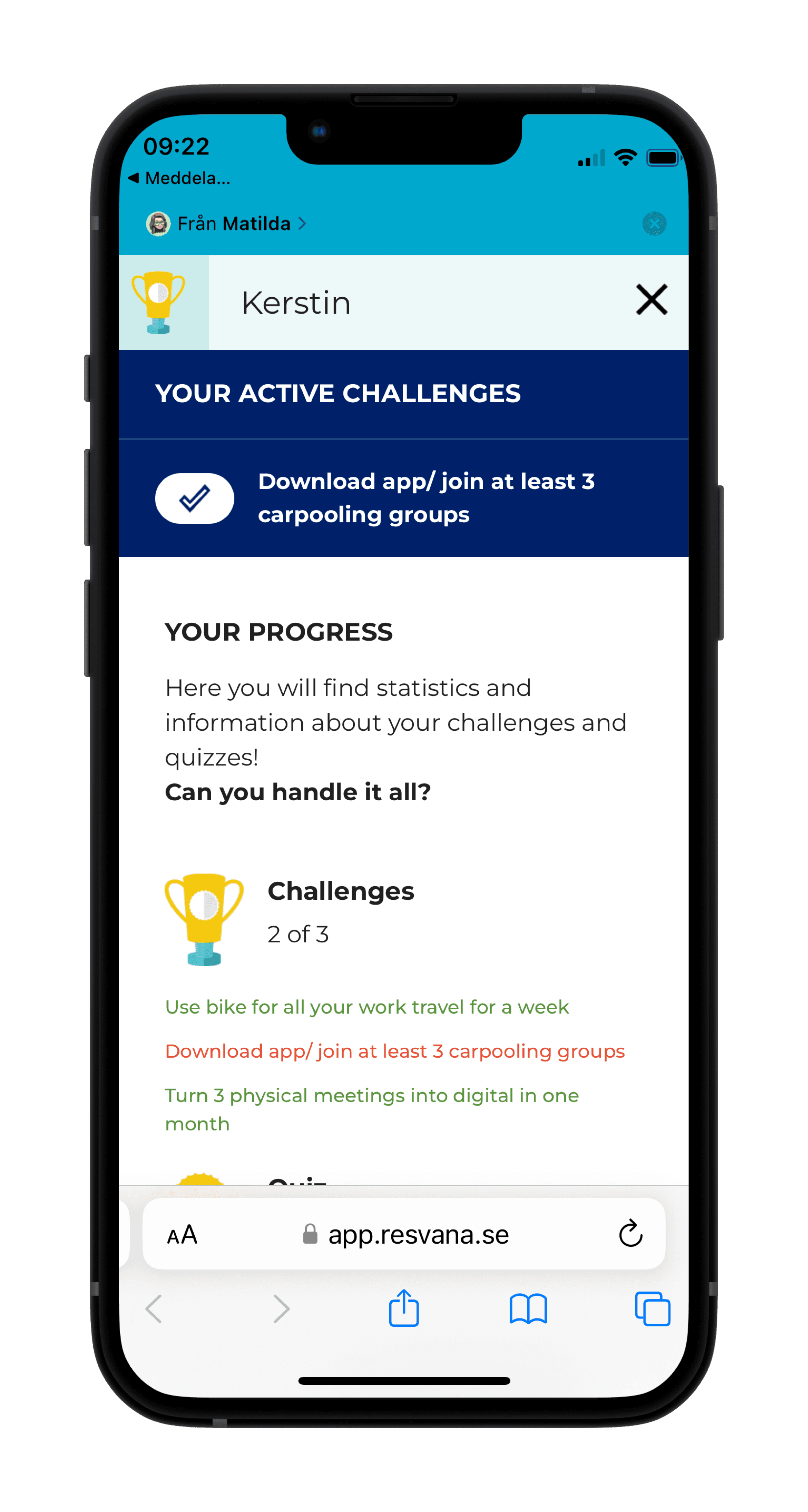
Before

Pre-defined challenges not tailored for user, consequently creating a lack of ownership.
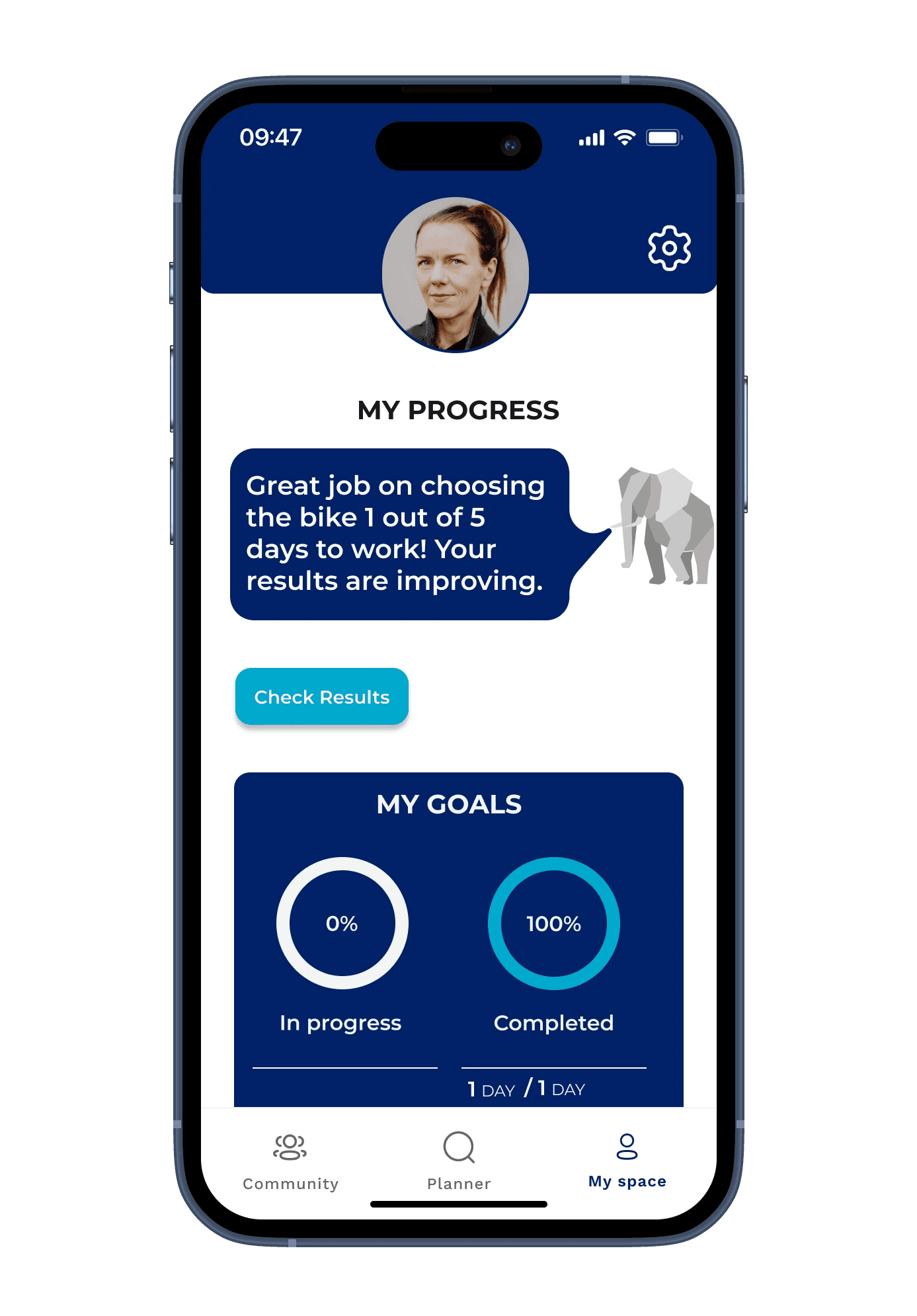
After

Personal space enabling to check results, set goals, settings, and get feedback on actions.
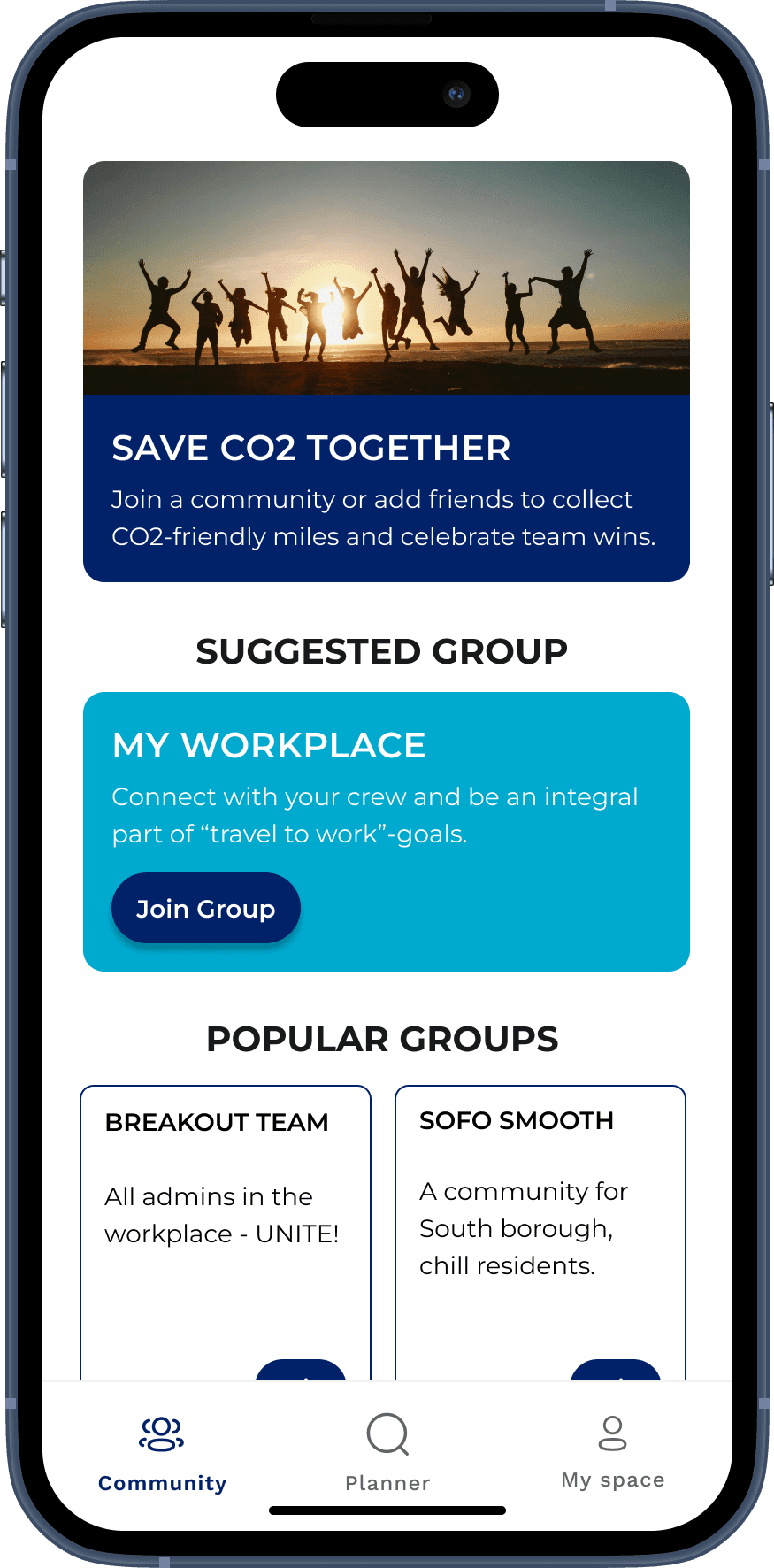
Community screen
Community screen

After

A community with tailored and optional group missions enabling users to improve impact together.

The design process
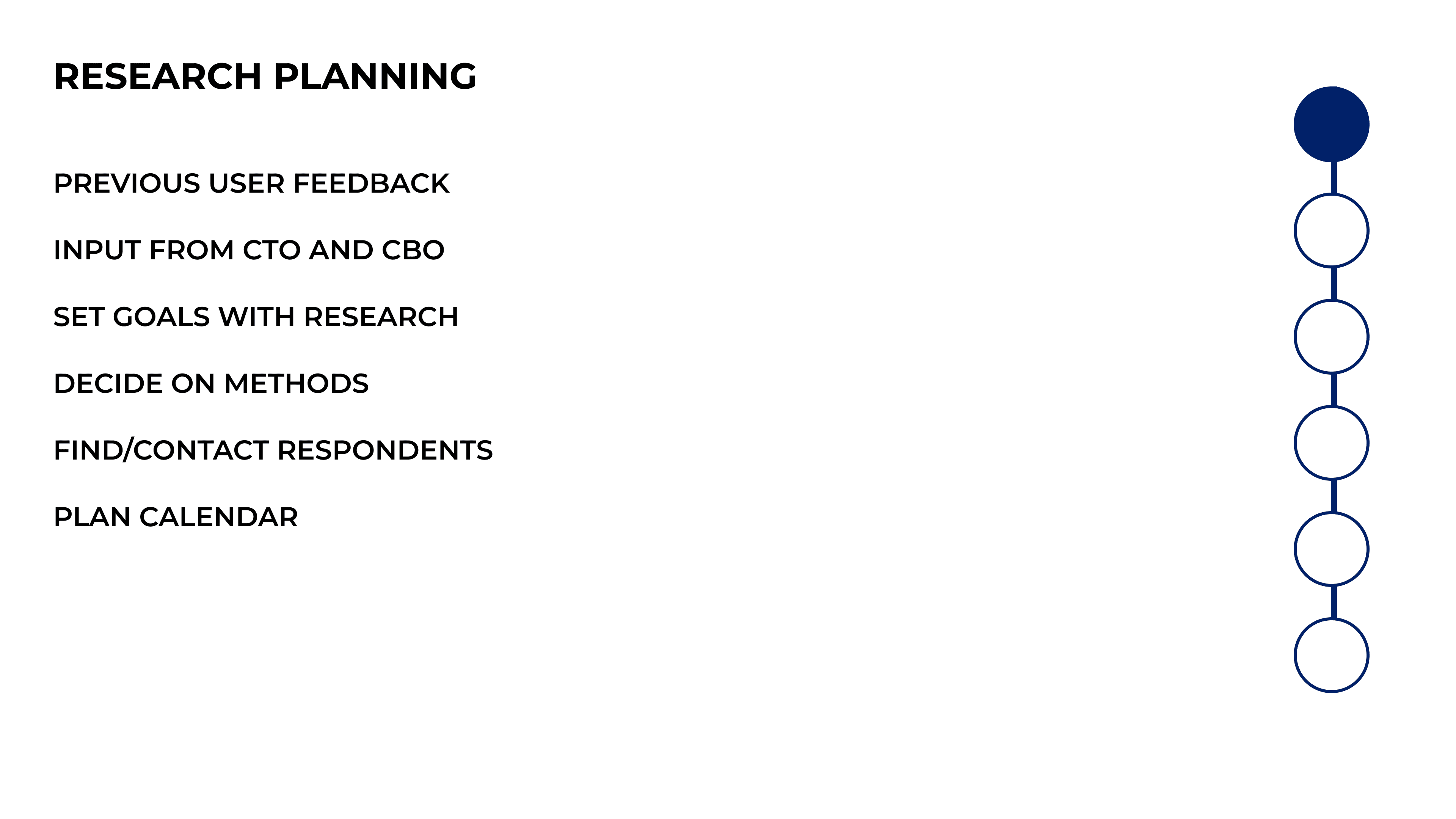
Planned the research. Reviewed background. Decided on methods. Reached out to testers.
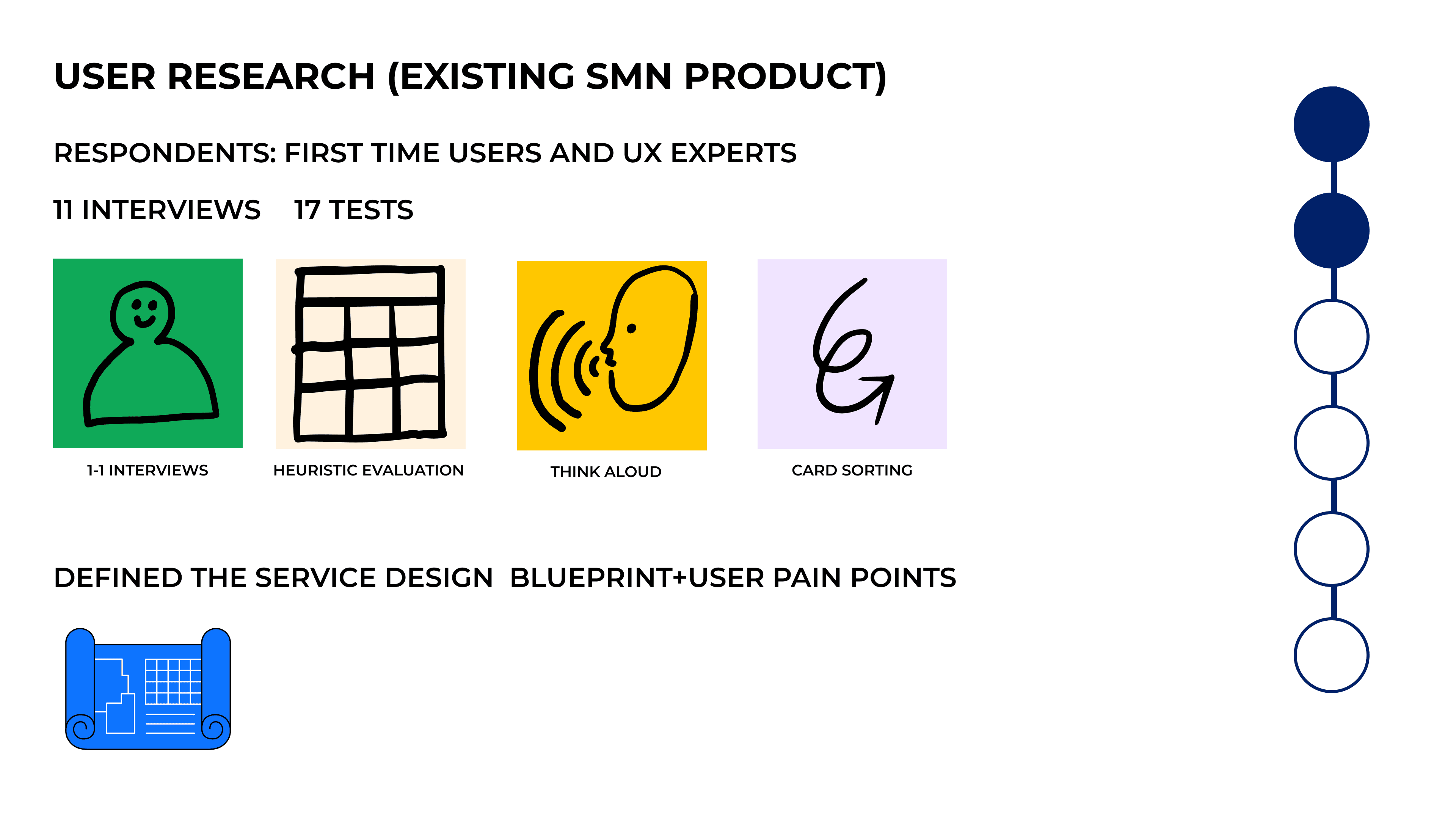
Conducted testing of current SMN solution. Mapped out the service design process.
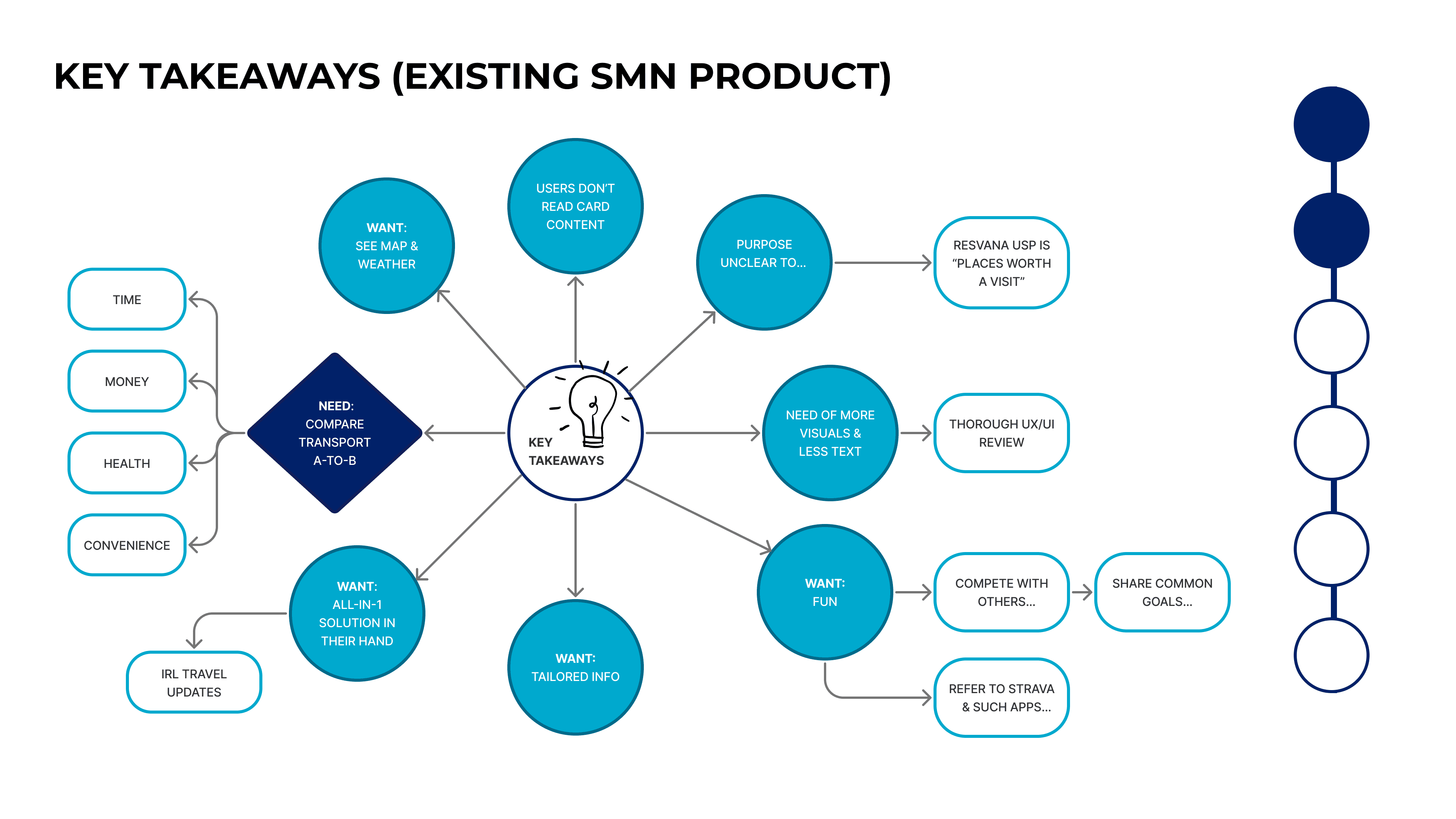
Analysed insights and defined user pain points from testing of the existing solution.
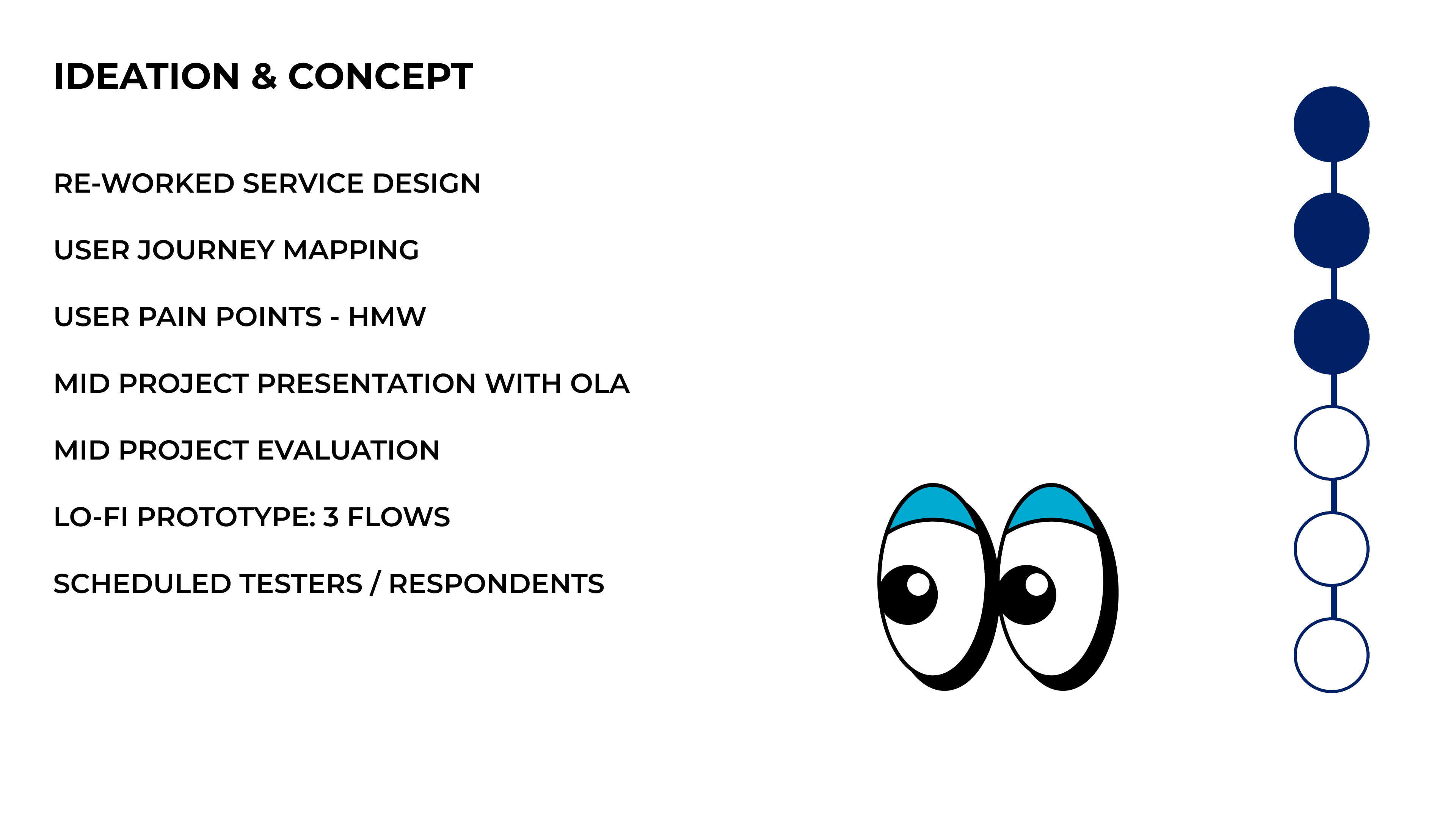
User journey mapping. Re-worked the service design process. Ideated and built out concept.
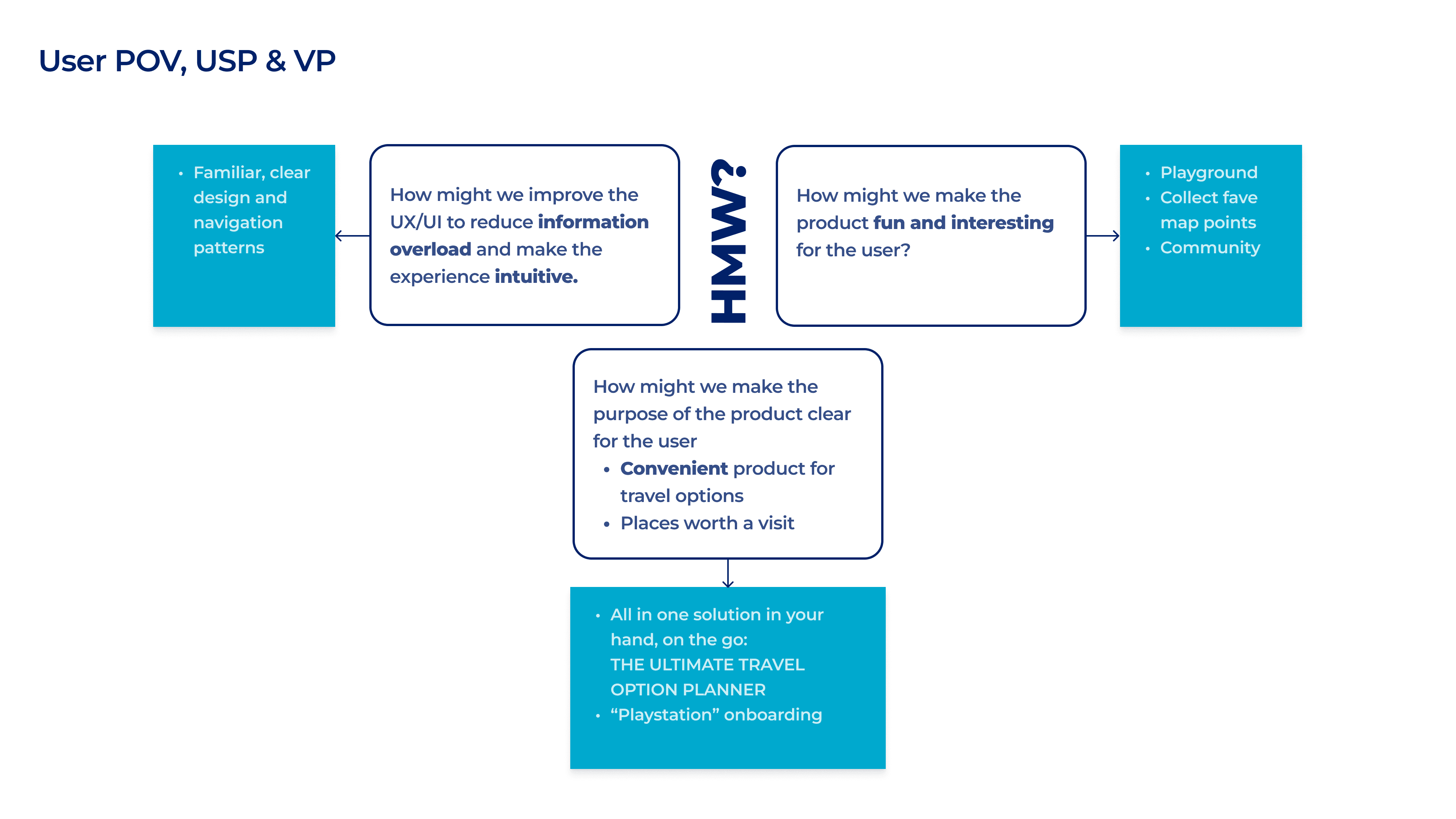
Defining core problem(s) to solve with How Might We?-process.
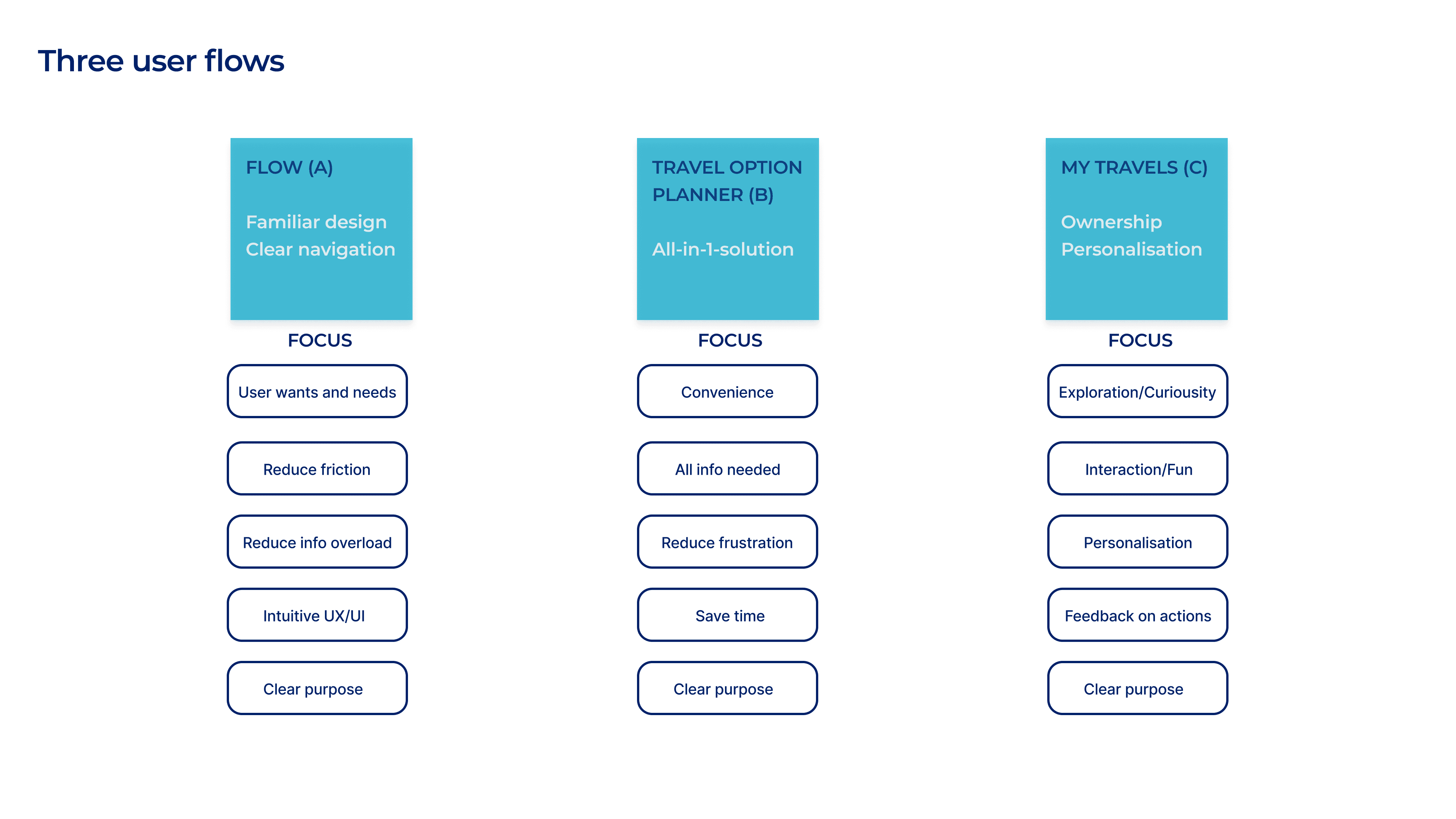
Content definition of the 3 different user flows. Designed wireframes.
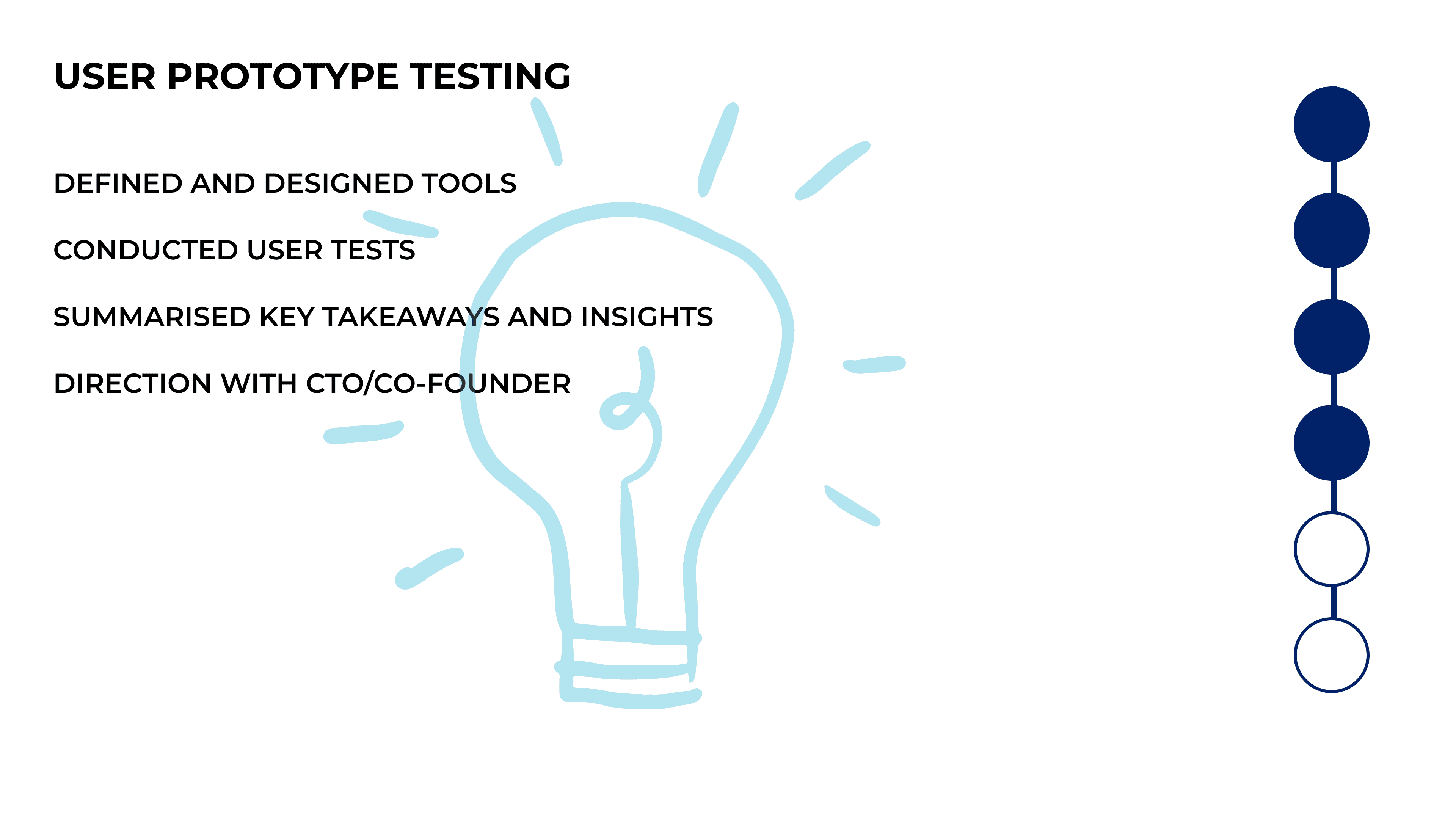
Scheduled testing. Designed Lo-Fi prototype. Conducted testing, withdrew new insights.
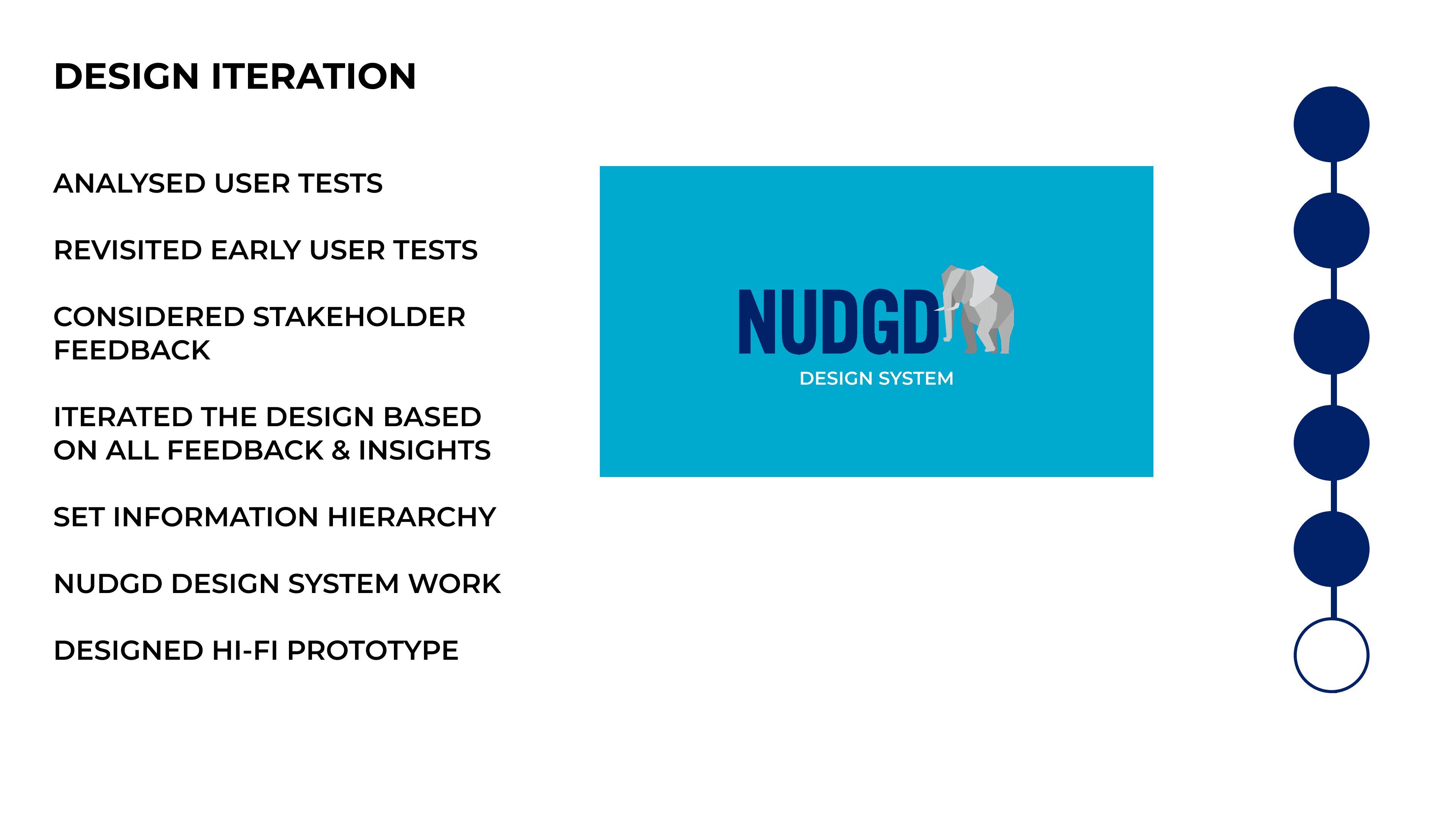
Analysed prototype testing. Iterated design based on the sum of feedback. Designed Hi-Fi prototype.

The solution

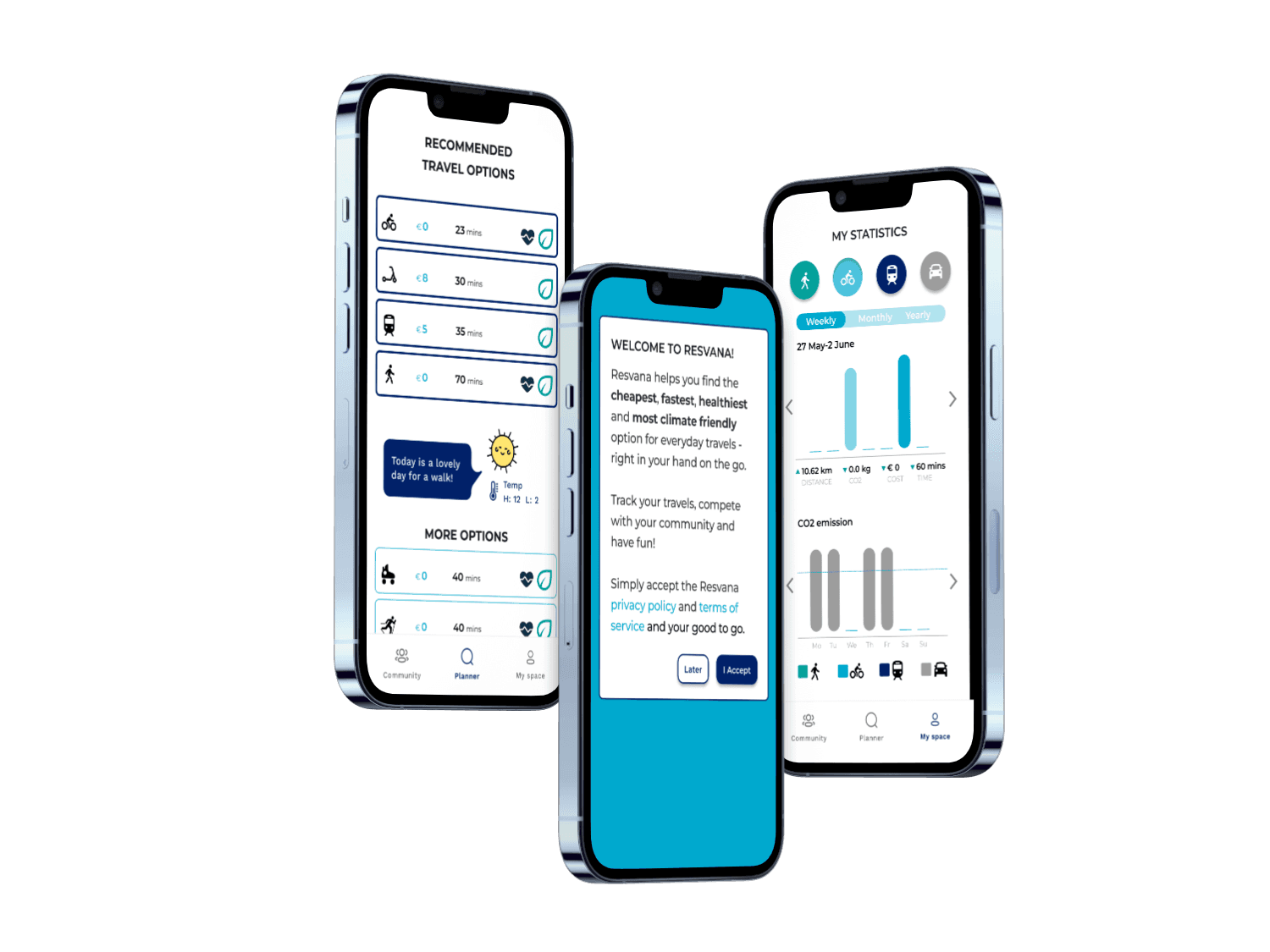
An app-solution with tailored onboarding, clarification of its purpose and an allover simplified user experience with more conventional design.


The solution enables a personal space with the opportunity of further tailoring to streamline user content. It offers fun features such as a community hub, measurable team goals and individual missions with traceable statistics of time, cost and health factors - to nudge the user towards more sustainable everyday travel habits.


The case of an app promotes scalability and enables push notifications with precise timing of nudging, when the user is to decide on travel option.

The design system

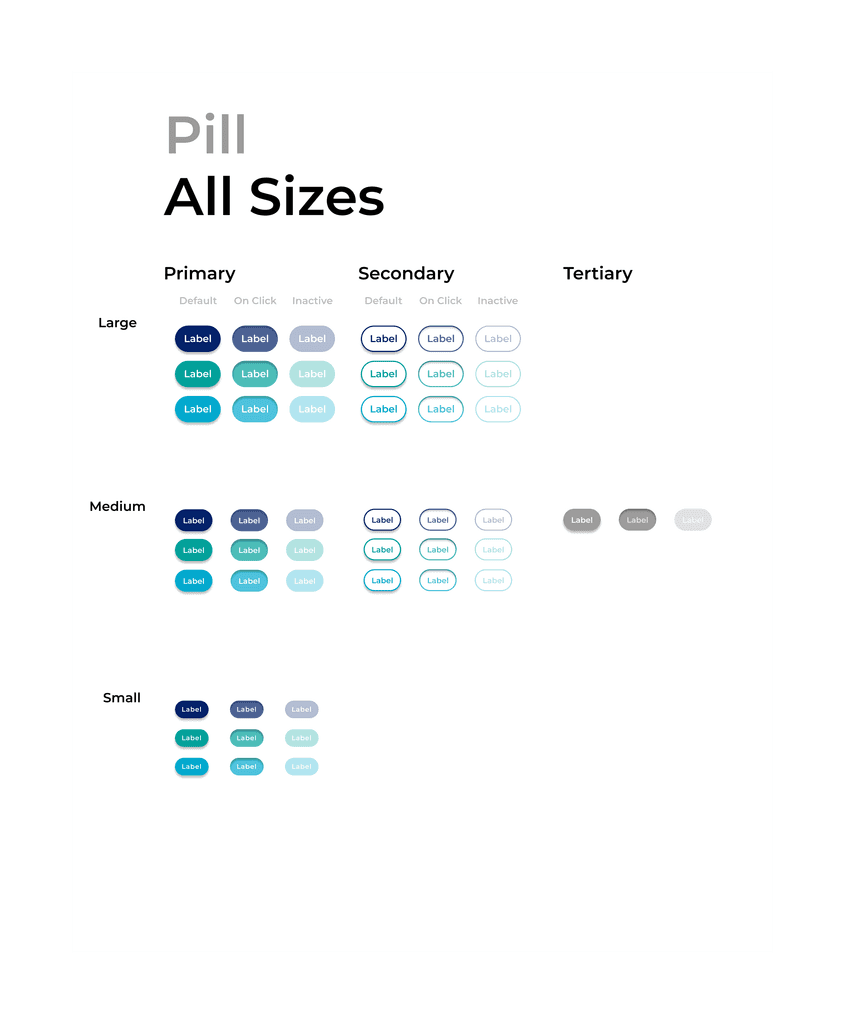
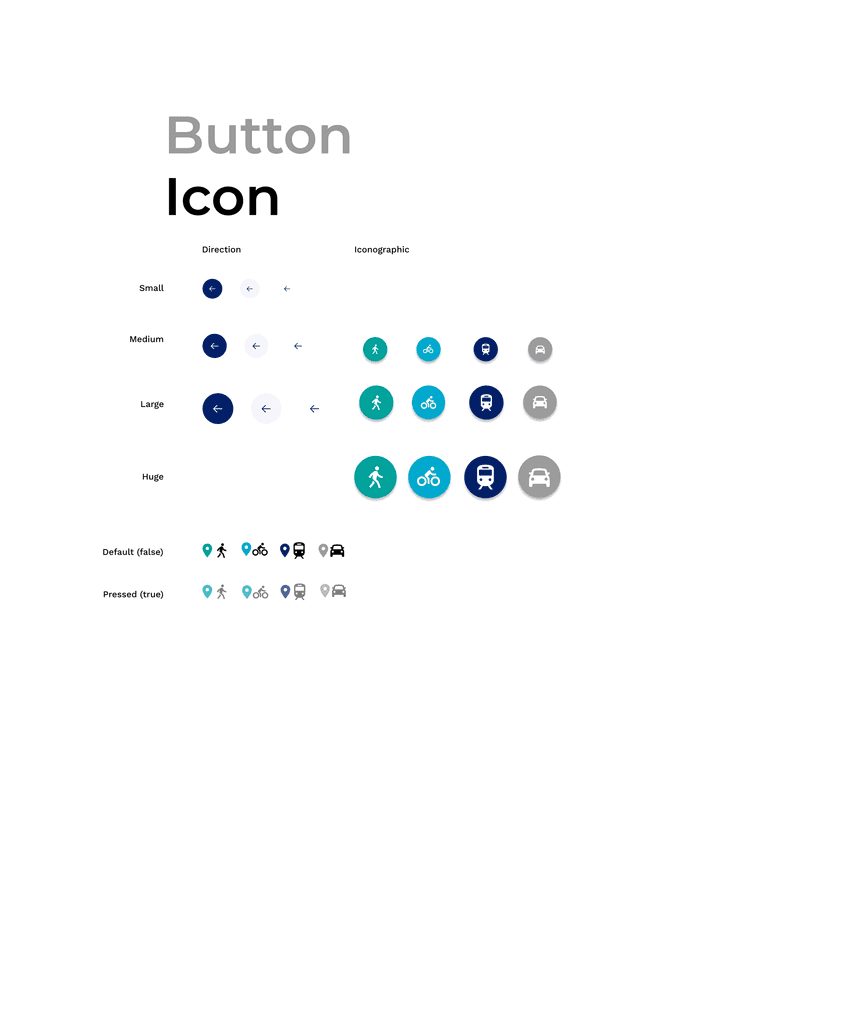
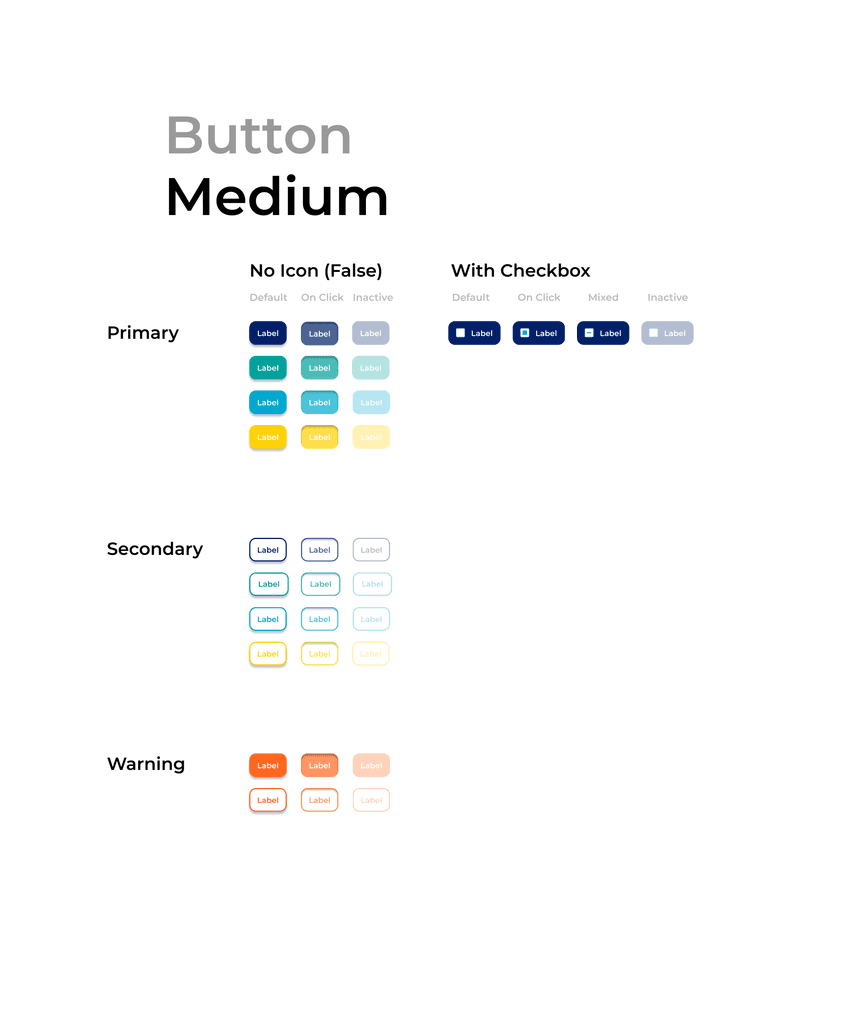
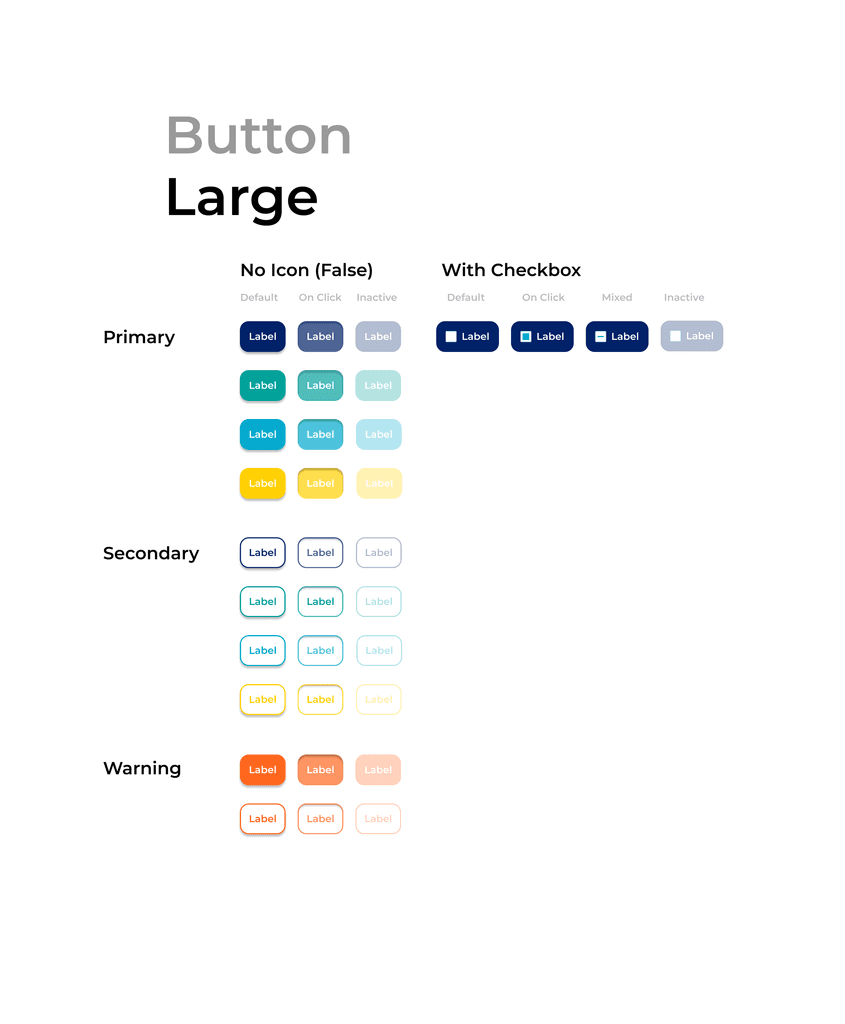
During my three months with Nudgd I also had the opportunity to start developing a design system for the company. It started with a button..
Create a free website with Framer, the website builder loved by startups, designers and agencies.